Cabinet Doors That Do Not Close Are a Common Inspection Issue
A kitchen or bathroom cabinet door that swings open, does not close flush, or bounces back after closing is noticed immediately during a move-out inspection. These issues are almost always mechanical in nature and are entirely fixable with basic tools in 15 to 30 minutes per door. Understanding the cause is the first step to the right fix.
Worn or Missing Magnetic Catches
Many older cabinet doors use magnetic catches to hold them closed. The catch consists of a magnet mounted inside the cabinet and a metal strike plate on the door. Over time, the magnet weakens, the screws loosen, or the alignment shifts. Check whether the door has a magnetic catch and whether the magnet is still aligned with the strike plate when the door is closed. Tightening the screws or repositioning the catch to realign with the strike plate often resolves the issue immediately. Replacement magnetic catches are available for under two dollars if the existing one is too worn to work properly.
European Hinge Adjustment
Modern kitchen cabinets use European cup hinges that allow the door to be adjusted in three directions: in and out, side to side, and up and down. These hinges have visible adjustment screws that allow you to fine-tune the door position without removing any hardware. If the door is not closing flush or is rubbing against an adjacent door or the cabinet frame, locate the adjustment screws on the hinge and turn them incrementally while testing the door position until it closes correctly. A small Phillips screwdriver is all you need.
Moving Out Soon?
Get our free room-by-room move-out checklist and keep your deposit.
See the Checklist →Loose Hinges
A cabinet door that sags or swings open when released usually has loose hinges. Tighten all hinge screws with a screwdriver. If a screw has stripped out of the cabinet frame, fill the hole with wooden toothpicks and wood glue, let dry, and drive the screw back in. This provides fresh material for the screw to grip.
Soft-Close Mechanisms
Some cabinets have integrated soft-close hinges that should close the door quietly and completely. If a soft-close door is not closing all the way, the damper in the hinge may have worn out or the hinge may need cleaning. The tension on most soft-close hinges is adjustable. Check the hinge for a small tension adjustment screw and increase the tension slightly to see if it resolves the issue.
Find cabinet hinges, magnetic catches, and hinge adjustment tools: cabinet door hardware on Amazon.
More help: Appliances and Plumbing guides
Reviving a Bathroom Exhaust Fan That Stopped Working
A bathroom exhaust fan does the important job of pulling moisture out of the room, and when it stops working, humidity lingers and feeds mold and mildew on walls, ceilings, and grout. Before assuming the fan motor has died, it is worth checking the simple causes, because the most common reason a bathroom fan seems weak or noisy is not failure at all but a thick coating of dust choking it.
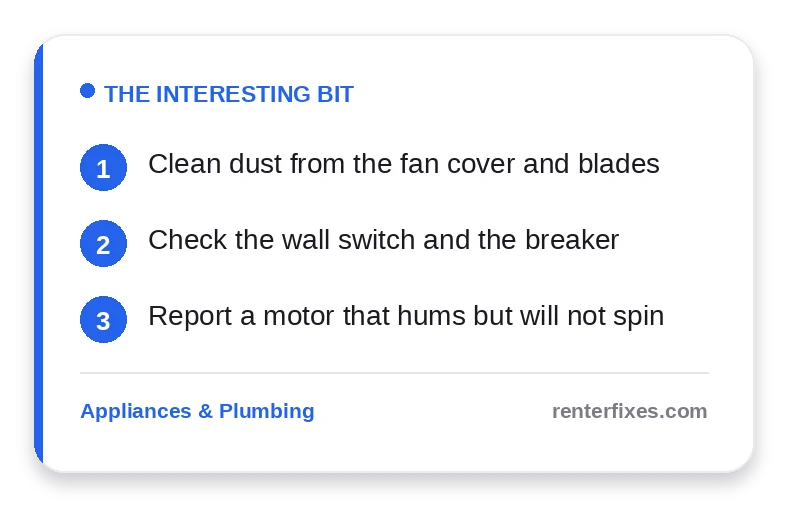
Dust is the first thing to address. Over months and years, lint and dust build up on the fan grille and the blades behind it, smothering airflow until the fan barely moves any air even while running. Turn off the power to the fan at the switch, and ideally the breaker, then pull down the cover, which usually unclips or is held by spring clips, and clean both the cover and the blades with a vacuum and a damp cloth. A freshly cleaned fan often regains nearly all its original pull.
If the fan is silent and does nothing when switched on, check that it is getting power. Confirm the wall switch controlling it works and that a breaker has not tripped. Some fans are wired to the same switch as the light and others to their own switch, so make sure you are flipping the right one. If the fan hums but the blades do not turn, the motor bearings may be seized, which usually means the motor needs replacing.
A motor replacement on a bathroom fan is generally a landlord’s job rather than a tenant repair, since it involves electrical work and access above the ceiling. Report a fan that stays dead after cleaning and confirming it has power, and mention if you have noticed moisture or mildew building up, since that strengthens the case for a prompt fix. In the meantime, running the fan longer after showers once it works again, and wiping down wet surfaces, keeps the humidity that damages a bathroom under control.
Clear the Fan Before You Call It Broken
A bathroom exhaust fan that hums but barely pulls air is usually choked with dust, not failing. Pop off the cover, wash it, and vacuum the caked lint off the fan blades and housing, because that buildup is what kills airflow and lets moisture and mildew take hold in the room.
If the fan is silent, check the wall switch and the breaker first, then confirm the motor spins freely. A motor that hums without turning or trips the breaker is a wiring or unit failure that belongs to your landlord. Report those rather than attempting electrical work, and you avoid both the danger and the liability for a repair that was never yours.
Frequently Asked Questions
Why is my bathroom exhaust fan not working?
Dust buildup, a tripped breaker, or a failed motor.
What can I fix?
Clean the cover and blades and check the switch and breaker.
When do I report it?
If the motor hums but the fan will not spin.
Related reading
- Why Is My Dishwasher Not Draining? Renter Fixes That Work
- Garbage Disposal Not Working? Try These Fixes First
- Renter Move-Out Mistakes That Cost You Your Deposit
- The Renter’s 30-Day Move-Out Countdown Plan
Official guidance & resources
A few reputable resources that back up the steps above:
- USA.gov — Tenant Rights — How to handle landlord disputes and deposit issues
- ENERGY STAR — HVAC Maintenance Checklist — Keeping HVAC and filters in good shape