A garbage disposal that will not work falls into two clear cases, and telling them apart points you straight to the fix. If you flip the switch and hear a hum but the unit does not spin, the motor has power but the grinding plate is jammed. If you hear nothing at all, the disposal has lost power, either from a tripped reset or a circuit issue. Always make sure the wall switch is off before you reach anywhere near the unit.
Humming But Not Spinning: Free the Jam
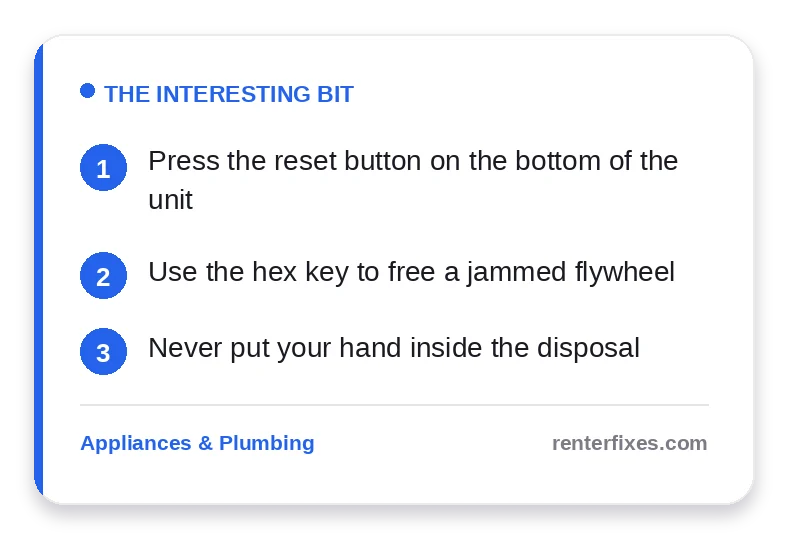
The obstruction is usually a piece of debris wedged against the impeller. Most units have a hex-shaped socket on the bottom center that fits an Allen wrench; insert the wrench and turn it back and forth to manually rotate the plate and free the jam. Many disposals even ship with the right wrench clipped to the housing. Once it turns freely, fish out the offending object with tongs, never your hand, and the unit should spin again.
Moving Out Soon?
Get our free room-by-room move-out checklist and keep your deposit.
See the Checklist →Completely Silent: Check the Reset First
Look for the reset button, a small red or black button on the underside of the unit. Disposals trip an internal overload protector when they jam or overheat, and pressing the reset restores power. Give the motor a few minutes to cool first if it was straining. If the reset does not hold or pops again immediately, check that the kitchen circuit breaker has not tripped before assuming the unit is dead.
Keeping It From Happening Again
Run cold water before, during, and after grinding to carry waste through, and feed scraps in gradually rather than packing the chamber. Keep out fibrous and starchy items like celery, potato peels, and pasta, plus grease, which congeals downstream and causes clogs. Grinding a few ice cubes occasionally helps knock buildup off the impeller.
When It’s a Landlord Job
Never put your hand down into a disposal, even switched off; use tongs or pliers for anything inside the chamber. If the unit leaks from its body, trips the breaker repeatedly, or stays dead after both the reset and a manual turn with an Allen wrench, the motor or seals have likely failed. That is a replacement job for your landlord rather than something to force, and reporting it promptly protects you from a claim that you caused the failure.
Find garbage disposal wrenches and reset tools: disposal repair tools on Amazon.
More help: Appliances and Plumbing guides
A Quick Safety Checklist Before You Touch Anything
Confirm the wall switch is off, and if you are at all unsure, flip the breaker for that circuit too. Never reach into the disposal with your fingers, even when you believe the power is off; use tongs, needle-nose pliers, or the flat end of a wooden spoon for anything inside the chamber. Keep the sink area dry while you work, since a wet hand near a switch is its own hazard separate from the disposal itself.
What a Working Disposal Should Sound and Feel Like
Once you have freed a jam or reset the unit, run cold water and switch it on briefly with nothing inside. It should spin up quickly with a steady hum and no grinding, scraping, or metallic rattle. A persistent rattle even with the chamber empty usually means something small, like a bottle cap or a piece of glass, is still lodged near the impeller, so repeat the Allen-wrench check rather than assuming the noise will work itself out.
Frequently Asked Questions
My garbage disposal stopped working, what first?
Press the reset button on the bottom of the unit.
What if it hums but will not turn?
Use the hex key to free a jammed flywheel.
Is it safe to fix?
Yes, with the power off and never your hand inside.
Related reading
- Bathroom Exhaust Fan Not Working? Easy Renter Fixes
- Stove Burner Won’t Light? Simple Fixes Before You Call Maintenance
- Why Is My Dishwasher Not Draining? Renter Fixes That Work
Official guidance & resources
For the authoritative guidance behind this advice, see:
- USA.gov — Tenant Rights — How to handle landlord disputes and deposit issues
- EPA WaterSense — Water-efficient faucets, showerheads and fixtures