
Mechanical Ways to Clear a Drain Without Chemicals
Chemical drain cleaners are tempting because they promise a hands-off fix, but in a rental they are a poor choice: the harsh chemistry can corrode older pipes, damage the finish on fixtures, and sit in a standing clog doing nothing useful while creating a hazard for the next person who works on the drain. Mechanical methods clear the same clogs more reliably and without risking damage you could be charged for.
For a slow or stopped sink, start by removing and cleaning the visible obstruction. In a bathroom sink, the clog is often a wad of hair caught on the pop-up stopper; lift or unscrew the stopper, pull out the gunk, and you have solved most of the problem. A flexible plastic drain-cleaning strip with barbed edges, slid down the drain and pulled back up, snags hair and debris from deeper in the pipe without any chemicals at all.
A plunger is the next tool, and technique matters. For a sink, block the overflow opening with a wet rag so your plunges build pressure in the pipe rather than venting out, then plunge firmly several times over a sealed drain. For a double sink, seal the other side too. The pressure waves break up and push through soft clogs that strips cannot reach, and a cup of very hot water afterward helps flush the loosened debris away.
Moving Out Soon?
Get our free room-by-room move-out checklist and keep your deposit.
See the Checklist →When a clog sits past the trap, the curved pipe under the sink, you can often clear it by placing a bucket underneath and unscrewing the trap by hand or with channel-lock pliers to remove and clean it directly. For tougher blockages, a hand-crank drain snake feeds a flexible cable into the pipe to break through or pull out the obstruction. A simple homemade flush of baking soda followed by vinegar, left to fizz and then rinsed with hot water, freshens a sluggish drain and is a gentle maintenance habit, though it works best on minor buildup rather than a full clog.
Clear the Clog Without Harsh Chemicals
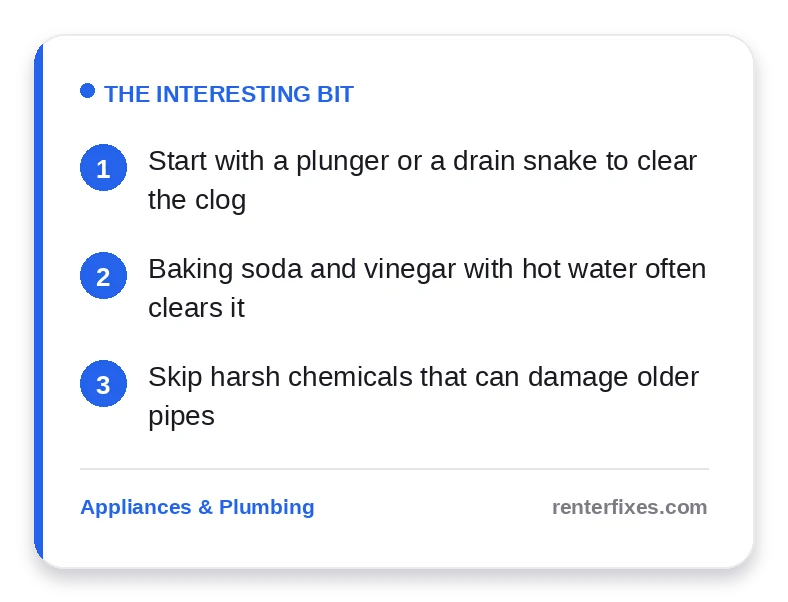
Chemical drain openers are tempting but risky in a rental, because they can damage older pipes and you may be liable for the harm. Mechanical methods clear most clogs without that danger. Start with a plunger to build pressure, or feed a drain snake or even a straightened wire hanger down to hook and pull out the blockage.
For a slow drain rather than a full stop, a baking-soda-and-vinegar treatment followed by a kettle of hot water often breaks up grease and soap buildup. These approaches protect the plumbing you do not own, and keeping a drain clear avoids the standing-water marks and odors that read poorly during a move-out inspection.
Keeping Drains Clear Long-Term
A monthly flush of hot water followed by a half cup of baking soda and a cup of vinegar, left to sit for fifteen minutes before rinsing, keeps grease and soap residue from re-accumulating between deeper cleanings. Mesh hair catchers in showers and bathroom sinks prevent the single most common cause of slow drains in rentals. If a drain that was recently cleared slows down again within a week or two, that usually points to a clog further down the line than a plunger or snake can reach, which is worth reporting rather than repeating the same fix.
Frequently Asked Questions
How do I unclog a drain without chemicals?
A plunger or drain snake, or baking soda and vinegar with hot water, usually works.
Why avoid chemical cleaners?
They can damage older pipes and are harsh in enclosed rentals.
What if it stays clogged?
Persistent clogs may be deeper and worth reporting to maintenance.
Related reading
- How to Fix Scuffed and Scratched Rental Floors Without Losing Your Deposit
- How to Fix Squeaky Floors in a Rental Without Lifting Boards
- How to Deep Clean Carpet in a Rental Without a Machine
- How to Fix a Running Toilet in Your Rental (No Plumber, No Drama)
Further reading
A few reputable resources that back up the steps above:
- HUD — Rental Assistance & Tenant Rights — Tenant rights and rental-assistance guidance by state
- EPA WaterSense — Water-efficient faucets, showerheads and fixtures