
Clogged Drains at Move-Out: Yours to Fix
A slow or clogged drain at move-out is almost always considered tenant-caused maintenance that will be addressed at your expense if you leave it. Hair, soap scum, grease, and debris accumulate in drains over the course of a tenancy from normal use. Most drains can be cleared completely in 15 to 30 minutes with a few basic tools or products. Leaving a clogged drain for your landlord results in a plumbing charge that is almost always more than the cost of clearing it yourself.
Start with Manual Removal
Before using any chemical drain cleaner, try removing the clog manually. In bathroom sinks and shower drains, the clog is most often a hair accumulation sitting just below the drain cover. Remove the drain cover if it is the kind that lifts off, or unscrew it. Use a drain cleaning tool, a wire bent into a hook, or needle-nose pliers to pull out the hair clog. You may be surprised how much material has accumulated. This method is immediately effective for hair clogs and does not require any products.
Plunging a Drain
For clogs deeper in the drain that cannot be reached manually, a cup plunger creates suction that dislodges the blockage. Fill the sink or tub with a few inches of water to cover the plunger cup, place the plunger over the drain, and pump firmly several times before pulling the plunger away sharply. Repeat several times. For a sink with an overflow hole, cover it with a wet cloth while plunging to maintain suction.
Moving Out Soon?
Get our free room-by-room move-out checklist and keep your deposit.
See the Checklist →Chemical Drain Cleaners
For stubborn clogs that do not respond to manual removal or plunging, a chemical drain cleaner dissolves organic material clogging the pipe. Enzyme-based drain cleaners are safer for pipes and the environment and work well for biological clogs like hair and soap scum with adequate dwell time. For immediate results on a tough clog, a stronger gel drain cleaner poured directly into the drain and allowed to work for the specified time is effective. Follow package instructions and always rinse with hot water afterward.
Kitchen Sink Clogs
Kitchen sink clogs are usually caused by grease buildup in the drain line. Pour a pot of boiling water down the drain first to melt grease accumulation. Follow with a mixture of baking soda and white vinegar to break up remaining buildup, then flush with more hot water. For persistent grease clogs, a gel drain cleaner formulated for grease is the most effective solution.
Find drain cleaning tools and products: drain cleaning supplies on Amazon.
More help: Appliances and Plumbing guides
Stopping a Drip by Replacing the Worn Part Inside
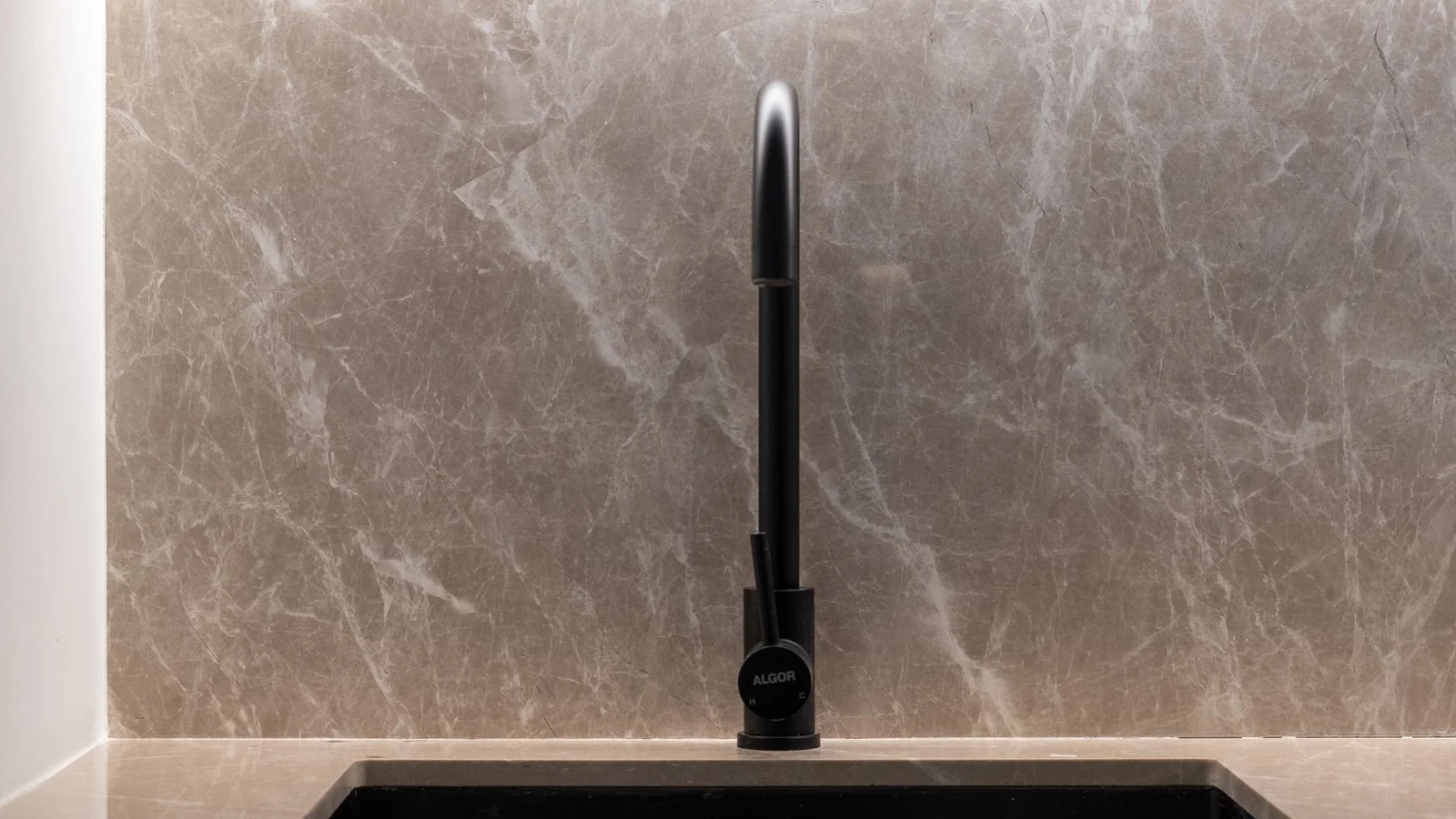
A faucet that drips steadily is almost always caused by a single worn part inside, and identifying which type of faucet you have tells you exactly what to replace. The drip wastes a surprising amount of water over a month and can stain a sink or tub, so it is worth fixing rather than living with. Before you touch anything, shut off the water to the fixture at the supply valves under the sink, then open the faucet to relieve pressure and plug the drain so no small parts disappear.
The most common rental faucets are compression, cartridge, ball, and ceramic-disc types. A compression faucet, with separate hot and cold handles that you screw down to shut off, drips because a small rubber washer at the base of the stem has worn out; replacing that inexpensive washer usually stops the drip. A cartridge faucet, common on single-handle and many two-handle models, drips when the cartridge wears, and the fix is to pull the old cartridge and drop in a matching new one.
Disassembly follows a consistent pattern. Pry off the decorative cap on the handle, remove the screw beneath, and lift the handle away to expose the inner mechanism. From there you unthread or unclip the worn part, taking a photo at each step so reassembly is straightforward. Bringing the old washer or cartridge to the hardware store ensures you buy an exact match, since these parts vary by brand and model and a near-match often still leaks.
Reassemble in reverse, seat the new part fully, and turn the water back on slowly while watching for leaks. A little plumber’s grease on rubber parts helps them seat and last. If the drip persists after a new washer or cartridge, the valve seat the part presses against may be pitted, which is a slightly bigger job. For a rental, a persistent or worsening leak that you cannot resolve with a simple part swap is worth reporting to your landlord, since plumbing inside the walls is their responsibility, not yours.
Always confirm the type of faucet before you buy parts, because that single detail determines everything that follows. A compression faucet needs a new rubber washer and possibly a seat; a cartridge faucet needs a matching cartridge; ball and ceramic-disc faucets need their own repair kits. Bringing the old part to the store, or at least noting the faucet brand and model, prevents the frustration of buying a near-match that still drips. Shut the water off at the supply valves first, and plug the drain so a dropped screw or spring does not vanish.
Frequently Asked Questions
Can I fix a dripping faucet myself?
Yes, replacing a worn washer or cartridge usually stops the drip.
What do I do first?
Shut off the water supply under the sink before disassembling.
How do I get the right part?
Match the replacement to your faucet brand and model.
Related reading
- How to Fix Scuffed and Scratched Rental Floors Without Losing Your Deposit
- How to Fix a Running Toilet in Your Rental (No Plumber, No Drama)
- What to Do With Furniture Damage You Caused in a Rental
- How to Make Rental Blinds Look New Again
Sources & further reading
Helpful authoritative reading on this topic:
- HUD — Rental Assistance & Tenant Rights — Tenant rights and rental-assistance guidance by state
- USA.gov — Tenant Rights — How to handle landlord disputes and deposit issues
- EPA WaterSense — Water-efficient faucets, showerheads and fixtures