
Furniture causes most of the floor and wall damage renters deal with at move-out. Drag marks on hardwood, dents in carpet, scuffs on walls from couches and bed frames, and holes from TV mounts are all standard issues, and the good news is that nearly all of it is repairable with basic supplies and a few hours of work.

Wall Damage From Furniture
Scuffs from furniture rubbing against walls often come off with a magic-eraser-type product. For deeper marks or paint transfer, spot painting with matching paint covers it completely. Holes from furniture handles hitting the wall need spackle, sanding, and touch-up paint. These are all sub-twenty-dollar fixes that take an evening at most.
Moving Out Soon?
Get our free room-by-room move-out checklist and keep your deposit.
See the Checklist →Hardwood Floor Scratches
Light surface scratches from furniture legs can be reduced with hardwood scratch-repair markers or wood filler in a matching color. For deeper gouges, wood filler applied and sanded flush, then finished with a matching stain marker, handles most situations. If a section of flooring is badly damaged, consult with your landlord before move-out rather than after inspection, since disclosing it yourself is almost always cheaper than having it discovered.
Carpet Dents and Impressions
Carpet dents from heavy furniture are generally considered normal wear and tear, not damage, and do not warrant a charge on their own. If the carpet has actual tears, burns, or stains caused by furniture legs, such as rust rings from metal feet, treat the stain with a carpet stain remover and assess whether professional cleaning is needed for anything more serious.
TV Mount Holes
TV mount holes are a common source of deductions because they require larger patches than standard nail holes. Use a wall repair patch kit for anything larger than a quarter inch, apply joint compound, sand smooth, and paint. This is a two-day fix since the compound needs to dry, but it saves you from a significant deduction that a landlord’s handyman would otherwise charge.
Damage to Furnished-Unit Furniture and Built-Ins
In furnished units, damage to the landlord’s own furniture, or to built-in features like cabinetry and shelving, raises a different question than wall or floor repairs. For minor cosmetic damage to wood furniture or cabinetry, the same techniques that fix floors and trim often apply: a scratch in a cabinet door can be filled with a color-matched wax stick and buffed, and a loose hinge or drawer slide usually just needs its screws tightened or, if the holes are stripped, the toothpick-and-glue trick that gives a screw fresh wood to bite into.
When It’s Bigger Than a Repair
More significant damage, a cracked countertop, a broken drawer front, or a deeply gouged surface, calls for judgment about repair versus disclosure. Attempting a major repair without the right skills can make it worse and create a larger charge, so weigh a careful DIY fix against the cost of a professional repair or a fair deduction. For damaged appliances or fixtures the landlord supplied, the safest course is usually to report the issue rather than attempt a repair that could complicate a warranty or the item’s function.
Disclosure Beats Concealment
Telling your landlord about damage before the walkthrough, ideally with an offer to repair it or accept an itemized, materials-based cost, demonstrates good faith and usually results in a smaller, fairer charge than a hidden flaw discovered later or a marked-up contractor invoice. Keep your move-in documentation handy, since furniture and built-ins that were already worn or damaged when you arrived are not your responsibility, and proof of their original condition protects you from paying for someone else’s wear.
Get the right repair products for furniture-related damage: furniture damage repair supplies on Amazon.
More help: Moving Out Checklist guides
Does Renters Insurance Cover Any of This?
Standard renters insurance covers your own belongings and liability for injuries to others, not damage you caused to the unit itself, so it will not pay for a scratched floor or a broken landlord-owned drawer front. Some policies do include limited liability coverage for accidental damage to the rental property, but this varies significantly by policy and insurer, so it is worth a quick call to your provider before assuming either that you are covered or that you are not. Do not count on insurance as your primary plan for furniture damage; treat repair or disclosure as the default and any insurance payout as a possible bonus.
How to Actually Have the Disclosure Conversation
A short, factual message works better than an apologetic one. State what happened, what you have already done about it, and what you are proposing: “The couch left a scuff on the living room wall that touch-up paint mostly fixed, and there’s a small gouge in the hallway floor from moving day that I’d like to either fix myself or split the cost of repairing.” Landlords who manage multiple units have seen this exact message many times and generally respond better to a tenant who flags an issue directly than to one who says nothing and hopes it goes unnoticed. Put the message in writing, even if you also mention it in person, so there is a record of when you disclosed it and what was discussed.
Document Before and After Any Repair
Photograph the damage before you touch it, and again once you have finished repairing it. This protects you two ways: it shows the landlord exactly what you addressed if the topic comes up, and it protects you if the repair does not turn out perfectly but is still clearly a good-faith attempt rather than something ignored. Keep these photos with your general move-out documentation rather than as a separate, easy-to-lose set.
Preventing the Next Round of Damage
If you are still mid-tenancy rather than actively moving out, felt pads under every furniture leg, furniture sliders for anything you move occasionally, and a habit of lifting rather than dragging heavy pieces prevent most of the scuffs, dents, and drag marks described above before they happen. A few dollars of felt pads applied early is far cheaper than any of the repairs on this list, and it means less to fix, disclose, or negotiate when the lease is actually up.
Sorting Damage Into Three Buckets
It helps to sort everything you find into one of three categories before you start fixing anything. The first bucket is small, fully fixable cosmetic damage: scuffs, minor scratches, small nail or anchor holes, a loose hinge. Handle these yourself with the techniques above and do not mention them to your landlord at all, since a well-executed repair is simply not noticeable. The second bucket is damage you can improve but not fully erase, like a deep gouge you filled reasonably well or a stain that lightened but did not fully lift. These are worth a brief, low-key mention so your landlord sees the effort rather than discovers an imperfect patch and assumes no effort was made. The third bucket is damage beyond a DIY fix, which belongs in the disclosure conversation described above rather than an attempted repair that could make things worse. Sorting first, rather than tackling whatever you notice first, keeps you from spending an afternoon on a wall scuff while a genuinely serious issue with a landlord-owned cabinet sits unaddressed.
What Landlords Actually Tend to Waive
Minor furniture-related marks that are cleanly repaired and barely visible are rarely worth a landlord’s time to dispute, since documenting and pursuing a tiny deduction costs more in administrative effort than the amount recovered. Landlords are far more likely to focus attention on damage that is either expensive to fix or affects a unit’s ability to be re-rented quickly, which is exactly why disclosing and offering a fair resolution on bigger items tends to go over better than hoping smaller repairs go unnoticed.
A Short Recap Before You Start
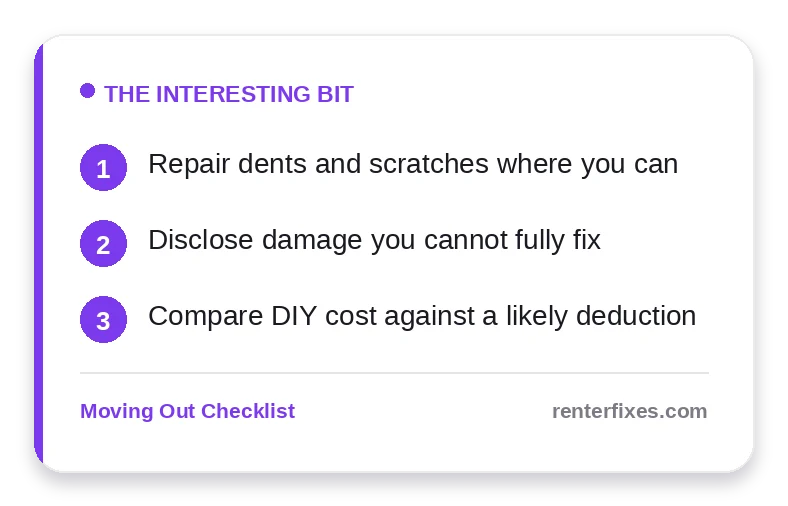
Repair what you can, disclose what you cannot, and always check your move-in photos before assuming responsibility for a mark that might already have been there. Those three habits cover the overwhelming majority of furniture-related situations a renter runs into at move-out, and following them in order keeps the process quick instead of turning into a room-by-room debate with yourself about what counts as damage.
Keep Everything in One Folder
Move-in photos, move-out photos, repair receipts, and any written disclosure messages are far more useful kept together in one dated folder than scattered across texts, emails, and phone albums. If a deduction is ever disputed, being able to hand over one organized record rather than reconstructing the timeline from memory is what actually settles the disagreement in your favor.
A Last Word on Tone
None of this requires an apologetic or defensive tone with your landlord. A factual, organized approach to furniture damage, repaired where possible and disclosed where not, is simply what a responsible move-out looks like, and it is treated that way by most landlords who manage more than a handful of units.
Frequently Asked Questions
What do I do about furniture damage I caused?
Repair dents and scratches where you can, and disclose what you cannot.
Is it cheaper to fix it myself?
Usually, compared with a likely deduction.
Should I hide it?
No, disclose damage you cannot fully repair.
Related reading
- Rental Floor Damage Checklist: What to Fix vs. What to Disclose
- Removing Command Strip Damage From Rental Walls
- How to Fix Scuffed and Scratched Rental Floors Without Losing Your Deposit
- How to Fix a Running Toilet in Your Rental (No Plumber, No Drama)
Helpful resources for renters
Helpful authoritative reading on this topic:
- HUD — Rental Assistance & Tenant Rights — Tenant rights and rental-assistance guidance by state
- USA.gov — Tenant Rights — How to handle landlord disputes and deposit issues