When It Makes Sense to Hire a Cleaning Service
Move-out cleaning is the most time-consuming part of leaving a rental. If you are moving long-distance, short on time, or the unit is large, hiring a professional cleaning service can be worth every dollar. In many cases it is cheaper than the cleaning fee a landlord would deduct. Here is what to know before booking.
What Move-Out Cleaning Typically Costs
Professional move-out cleaning for a standard apartment typically runs $150 to $400 depending on size, location, and condition. A studio or one-bedroom usually falls in the $150 to $225 range. A two-bedroom is typically $200 to $300. A three-bedroom or larger unit can run $300 to $450 or more. Move-out cleans cost more than regular maintenance cleanings because they cover inside appliances, cabinets, and detailed areas that routine cleans skip.
What Move-Out Cleaning Should Include
A proper move-out clean should cover: oven interior and exterior, refrigerator inside and out, inside all cabinets and drawers, all bathroom fixtures and grout, baseboards, window sills and tracks, blinds, light switch plates, inside closets, and all floors. Confirm the scope in writing before booking. Some services charge extra for inside appliances or heavily soiled areas.
Moving Out Soon?
Get our free room-by-room move-out checklist and keep your deposit.
See the Checklist →How to Find a Reliable Service
Ask for move-out specific cleaning quotes rather than standard deep clean rates. Check Google reviews and look specifically for reviews mentioning security deposit or move-out cleaning. Get at least two quotes. Ask if they offer a guarantee and whether they will return to re-clean if your landlord flags something.
Get a Receipt
Always get an itemized receipt. If your lease requires professional cleaning at move-out, the receipt serves as proof of compliance. It also gives you documentation if a landlord tries to charge for cleaning despite your having hired a service.
DIY vs. Hiring: The Quick Math
If your deposit is $1,500 and a professional clean costs $200, and a DIY clean takes eight to ten hours, the math often favors hiring. Your time has value. If the unit is small and you have time, DIY with the right products is perfectly viable.
For DIY move-out cleaning, these products cover everything: move-out cleaning supplies on Amazon.
More help: Moving Out Checklist guides
Deciding Whether a Cleaning Service Is Worth It
Hiring a move-out cleaning service can be a smart investment or an unnecessary expense depending on your situation, and weighing a few factors helps you decide. The core trade-off is time and standard: a professional crew cleans an empty apartment to a high, inspection-ready standard in a few hours, which is valuable when you are short on time, the unit is large or heavily soiled, or your lease specifically requires professional cleaning. Against that you weigh the cost, which varies with the size and condition of the unit.
Cost depends mostly on square footage, the number of bathrooms, and how much work the place needs, with deep move-out cleans priced higher than routine cleaning because they include the oven, inside cabinets, appliances, and other detail work. Some leases require a professional carpet cleaning receipt specifically, in which case hiring out at least that portion may be mandatory rather than optional. Getting a couple of quotes and confirming exactly what the deep-clean package includes prevents surprises, since not every service covers windows, walls, or inside the refrigerator by default.
When you do hire, choose carefully and protect yourself. Look for a service experienced in move-out cleans specifically, read reviews, and confirm they guarantee their work in case the landlord finds a missed spot. Ask for an itemized list of what the clean covers and make sure the high-scrutiny areas, oven, bathroom grout, baseboards, and appliance interiors, are included. Keep the receipt, which can serve as proof you met a lease cleaning requirement and as evidence of the condition you left the unit in.
For many renters, a hybrid approach works best: do the straightforward cleaning yourself and hire out only the parts that are hardest or most time-consuming, such as carpet steam cleaning or the oven. If your deposit is large and the lease standard is high, the cost of a professional clean can easily pay for itself by avoiding cleaning deductions and the marked-up charges a landlord would otherwise assess. If the unit is small and you have the time to clean it thoroughly yourself, that money stays in your pocket. The right answer comes down to your time, your lease terms, and the condition of the unit.
Is a Cleaning Service Worth It for Renters?
Whether to hire out the move-out clean comes down to time, the size of the unit, and how much of your deposit is at stake. If your lease specifically requires a professional carpet or whole-unit cleaning, paying for it and keeping the invoice is often the cleanest way to satisfy that clause and avoid an argument later. For a small studio you can clean in an afternoon, the money is usually better kept in your pocket.
Where a service earns its fee is on the jobs renters tend to rush: the inside of the oven, the range hood filter, hard-water buildup in the bathroom, and baseboards. If you do hire someone, walk the unit with them before they leave and photograph each room afterward so you have proof the work was done to a move-out standard.
Frequently Asked Questions
Should I hire a move-out cleaning service?
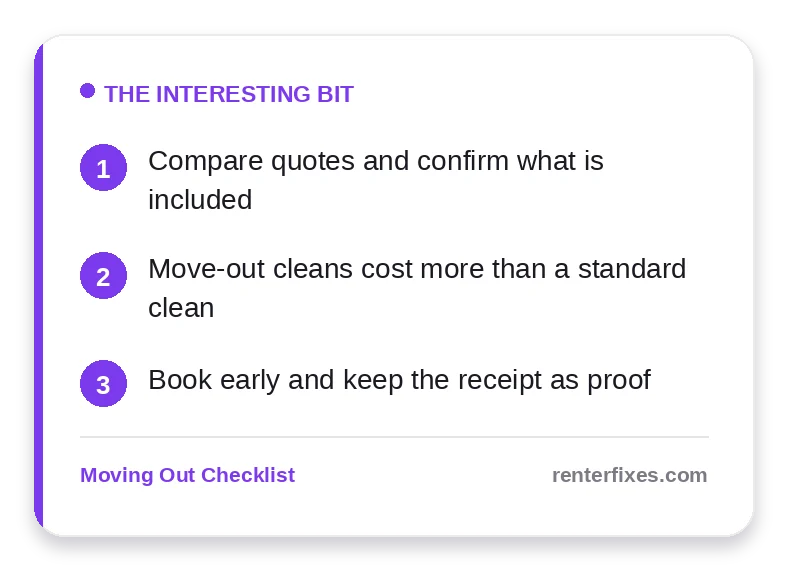
It can help if you are short on time; compare quotes and what is included.
How much does it cost?
A move-out clean costs more than a standard clean.
Any tips?
Book early and keep the receipt as proof of cleaning.
Related reading
- Move-Out Cleaning Checklist: What Landlords Want Spotless
- Renter Move-Out Mistakes That Cost You Your Deposit
- How to Take Move-Out Photos That Actually Protect You
- The Renter’s 30-Day Move-Out Countdown Plan
Official guidance & resources
Related official resources:
- USA.gov — Tenant Rights — How to handle landlord disputes and deposit issues
- EPA Safer Choice — EPA-certified safer cleaning products