Understanding the Landlord Inspection Mindset
Landlords conducting move-out inspections are working through a systematic assessment, either from a physical checklist or a mental one developed through experience. They are looking for two categories of issues: chargeable damage (things beyond normal wear that you are responsible for) and cleaning issues (things that require professional cleaning to restore to move-in condition). Understanding what specifically falls into each category gives you the ability to address items before they become deductions.

Walls: The First and Most Scrutinized Surface
Landlords walk each room and look at all four walls systematically. They check for holes larger than small nail holes, significant scuffs or paint damage beyond light surface marks, stains that do not wipe away, and any evidence of unauthorized modifications. Small nail holes from hanging pictures are generally normal wear and tear in most states. Holes from anchors, door handles, or accidents, and walls with extensive scuffing or paint damage, are chargeable. Touch-up paint applied with the right color match resolves the majority of wall issues before inspection.
Floors and Carpets
Floors get a close look in every room. On carpet, landlords check for stains (especially around doors and in high-traffic areas), burns, pet odor, and general soiling beyond normal wear. On hard floors, they check for deep scratches, chips, warping from water, and surface condition. Carpet stains and floor scratches are the two most common floor-related deductions. Steam cleaning and scratch repair products address both before inspection effectively.
Moving Out Soon?
Get our free room-by-room move-out checklist and keep your deposit.
See the Checklist →Kitchen Appliances and Surfaces
Landlords open the oven, check under and behind the range, open the refrigerator, and check cabinet interiors. Grease buildup, food residue in appliances, and dirty cabinet interiors are consistently charged as cleaning issues. The stovetop area near the range receives particular scrutiny. These surfaces require genuine deep cleaning rather than surface wiping to pass inspection. Check the inside of the microwave, the dishwasher filter, and under the sink while you are at it.
Bathroom
Grout, caulk, toilet condition, fixture cleanliness, and mold are all checked thoroughly in the bathroom. This is the highest-density inspection area in most apartments. Mold on caulk, hard water buildup on fixtures, and dirty grout are the three most common bathroom deductions. All three are addressable with targeted cleaning and recaulking if needed.
Doors, Windows, and Hardware
Every door in the unit is opened and closed. Sticky locks, broken latches, missing screens, and damaged blinds all appear on inspection reports. Check every hinge, every window latch, and every screen. Towel bars, toilet paper holders, and cabinet hardware are tested for stability. Replace anything broken and tighten anything loose. This final pass through hardware takes 15 minutes and eliminates several easy deduction items.
Find the supplies to address what landlords look for: move-out inspection prep supplies on Amazon.
More help: Moving Out Checklist guides
Seeing the Unit Through a Landlord’s Eyes
Knowing what landlords actually scrutinize during a move-out inspection lets you focus your effort where it counts instead of spreading it thin. Inspectors are not looking for perfection; they are comparing the unit’s current condition against its move-in condition and against normal wear, and they gravitate to a predictable set of high-impact areas. Understanding that list tells you exactly where a deduction is most likely to originate.
Kitchens and bathrooms top the list because they reveal neglect fastest. In the kitchen, expect close looks at the oven interior, the stovetop, inside and behind the refrigerator, the sink, and the cabinet interiors. In the bathroom, the inspector checks the toilet, tub and shower, grout and caulk for mold, the exhaust fan, and any water staining. These rooms account for a large share of cleaning deductions, so a spotless kitchen and bath do more for your deposit than almost anything else.
Walls, floors, and fixtures are the next focus. Landlords look for holes beyond a few small nail holes, unapproved paint, scuffs, and stains; for carpet stains, burns, and tears versus ordinary traffic wear; and for hardwood or vinyl gouges versus light surface scratches. They check that light fixtures, blinds, smoke detectors, and provided appliances are present and working, and that nothing is missing or broken compared to move-in.
The easy-to-forget details often leave the strongest impression, for better or worse. Inspectors run a finger along baseboards and window tracks, look on top of doors and fans for dust, check inside closets and on shelves, and notice lingering odors immediately. They confirm all keys, remotes, and fobs are returned and the unit is fully emptied of belongings and trash. Knowing this checklist, you can walk your own unit against it and clean and repair to the standard an inspector applies, which removes most of the surprises that lead to disputes.
It also helps to understand the inspector’s frame of mind, which is comparative rather than punitive. They are not hunting for reasons to keep your money so much as documenting how the unit’s condition differs from when you moved in, weighed against normal wear. That is why your own move-in documentation is so powerful during the inspection: being able to show that a mark or worn spot predates you, or falls under ordinary wear for the length of your tenancy, shifts the conversation from accusation to evidence and heads off deductions before they are written down.
Frequently Asked Questions
What do landlords check at move-out?
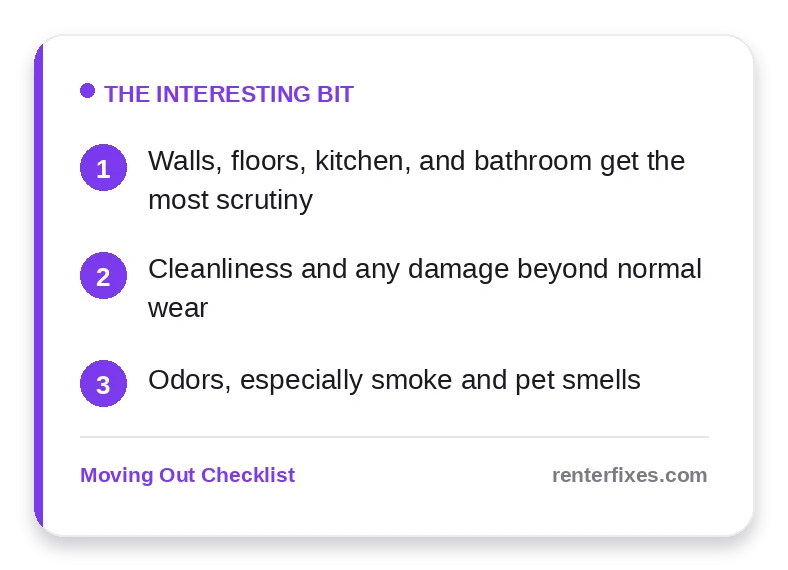
Walls, floors, the kitchen and bathroom, cleanliness, and odors.
What draws deductions?
Damage beyond normal wear and poor cleaning.
How do I prepare?
Repair, deep clean, and document before the inspection.
Related reading
- How to Take Move-Out Photos That Actually Protect You
- Move-Out Cleaning Checklist: What Landlords Want Spotless
- How to Hire a Move-Out Cleaning Service (And What It Costs)
- Renter Move-Out Mistakes That Cost You Your Deposit
Helpful resources for renters
Want to dig deeper? These trusted, independent resources are worth a read before you start:
- HUD — Rental Assistance & Tenant Rights — Tenant rights and rental-assistance guidance by state
- USA.gov — Tenant Rights — How to handle landlord disputes and deposit issues