
Why a Move-Out Letter Matters
A move-out letter is a written record that you vacated the unit on a specific date, in a specific condition, and returned the keys. It protects you from future disputes about when you left, what you left behind, or what condition the apartment was in. It also starts the clock on your landlord’s legal obligation to return your deposit.

What to Include in Your Move-Out Letter
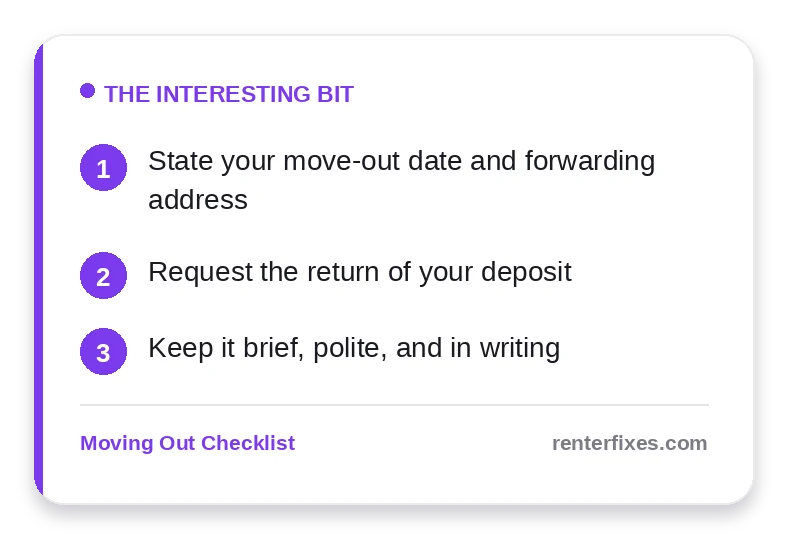
Keep it simple and factual. Your letter should include: your name and current address, the rental property address, your official move-out date, a brief statement of the unit’s condition, a list of any items you are returning (keys, fobs, garage openers), your forwarding address for the deposit return, and a request for the deposit to be returned within the legally required timeframe.
Sample Move-Out Letter
Dear [Landlord Name], I am writing to confirm that I have vacated the property at [address] as of [date]. The unit has been cleaned and all repairs have been made. I am returning [number] keys, [any other items]. Please return my security deposit of $[amount] to my forwarding address at [your new address] within the timeframe required by law. I have documented the condition of the unit with photographs, copies of which I am attaching to this letter. Please contact me at [phone/email] with any questions. Thank you.
Moving Out Soon?
Get our free room-by-room move-out checklist and keep your deposit.
See the Checklist →How to Send It
Send the letter by email so you have an automatic timestamp and a record that it was received. If your lease requires written notice, also send a physical copy by certified mail with return receipt. Keep copies of both. Attach your move-out photos to the email.
When to Send It
Send your move-out letter on the day you hand over keys, after you have completed your final walkthrough and documentation. Do not send it in advance and then make further changes to the unit.
Make sure the unit is in great shape before you write the letter: move-out cleaning supplies on Amazon.
More help: Moving Out Checklist guides
What to Put in a Move-Out Letter
A move-out letter is your formal written notice that you are vacating, and a well-built one does double duty: it satisfies the notice requirement in your lease and it creates a dated record that protects you later. Many leases require written notice a specific number of days in advance, often thirty or sixty, so the letter is not a formality you can skip. Sending it correctly and on time is itself one of the things that keeps a landlord from claiming you breached the lease terms.
Open the letter with the essential facts stated plainly: your name, the full rental address including any unit number, the date you are writing, and the specific date you intend to vacate. Reference your lease and confirm that the notice period you are giving meets its requirements. Being precise about the move-out date matters, because ambiguity here can create disputes about whether you gave proper notice or owe additional rent.
Include your forwarding address prominently, because this is where your security deposit and any itemized statement of deductions will be mailed. Renters who forget this step sometimes never receive their deposit simply because the landlord had nowhere to send it. Request, in writing, that the deposit be returned within the timeframe your state requires, and ask to schedule a move-out inspection or walkthrough if one is available, since attending it lets you address concerns before they become deductions.
Keep the tone professional and businesslike even if your relationship with the landlord has been strained, because this document may end up as evidence and a courteous, factual letter reflects well on you. Avoid emotional language or airing grievances; stick to the logistics of the move-out. If there are practical details to coordinate, such as how and when keys will be returned, mention them so there is a clear record of the arrangement.
Finally, send the letter in a way that proves delivery and keep a copy for yourself. Email creates an automatic timestamp, and for important notice many renters also send a paper copy by a trackable method so there is no dispute that the landlord received it on time. Save your copy with your move-in documentation and lease, so all your records sit together. A clear, timely, well-documented move-out letter sets a professional tone for the entire exit and removes one of the easiest grounds a landlord could otherwise use to justify withholding money.
How you send the letter matters as much as what it says. Email gives you an automatic timestamp and an easy record, but for a notice with legal weight many renters also send a paper copy by a trackable, signature-confirmed method so there is no argument about whether or when the landlord received it. If your lease specifies a delivery method for notice, follow it exactly, since a technically improper notice can be treated as no notice at all.
Time the letter against your lease’s notice requirement rather than your move date. If the lease requires sixty days and you send notice forty days out, you may owe additional rent regardless of when you actually leave. Count backward from your intended move-out day to find the latest date you can give proper notice, and send it with a margin so a delivery delay does not push you past the deadline.
Frequently Asked Questions
What goes in a move-out letter?
Your move-out date, forwarding address, and a request to return the deposit.
How long should it be?
Brief and polite, just the key details in writing.
Why put it in writing?
A written record protects you in a deposit dispute.
Related reading
- How to Do a Move-Out Walkthrough Before Your Landlord Does
- How to Patch Nail Holes So Your Landlord Never Sees Them
- How to Hire a Move-Out Cleaning Service (And What It Costs)
- Renter Move-Out Mistakes That Cost You Your Deposit
Further reading
A few reputable resources that back up the steps above:
- HUD — Rental Assistance & Tenant Rights — Tenant rights and rental-assistance guidance by state
- USA.gov — Tenant Rights — How to handle landlord disputes and deposit issues