
What a Renter Can Check When the Fridge Stops Cooling
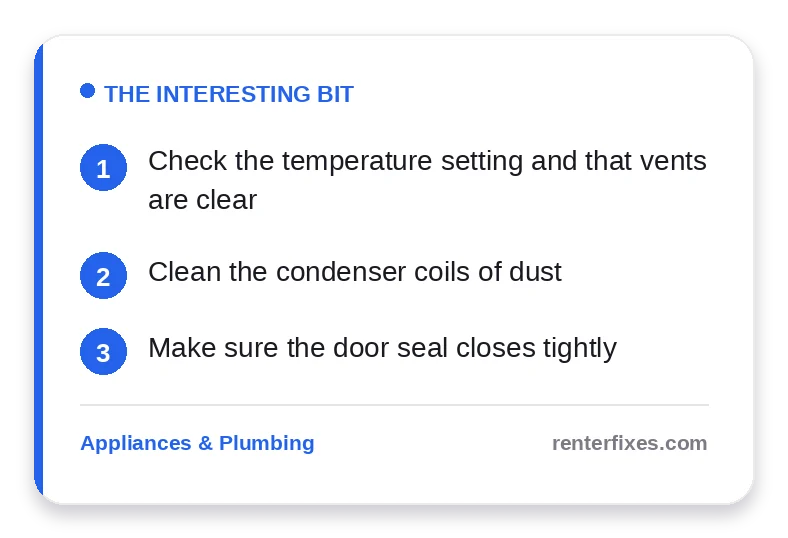
A refrigerator that has stopped cooling is alarming because of the food at stake, but several of the most common causes are things a renter can check and fix in a few minutes before assuming the appliance has failed. Start with the basics that are easy to overlook: confirm the unit still has power at the outlet, that a breaker has not tripped, and that the temperature dial inside has not been bumped to a warmer setting by a shifting item or a curious child.
Airflow is the next thing to examine. A refrigerator cools by circulating cold air, and packing it too full, especially blocking the vents where cold air enters from the freeze, prevents that circulation and leaves sections warm. Rearrange items away from the vents. Then check that the door is sealing; a gasket that is dirty, torn, or held open by an overstuffed shelf lets cold air leak out continuously. Clean the gasket and make sure nothing is propping the door ajar.
The condenser coils are the most overlooked culprit. These coils, usually behind or beneath the fridge, release heat, and when they are caked in dust and pet hair they cannot do their job, so the fridge runs constantly and cools poorly. Unplug the unit, locate the coils, and vacuum or brush them clean. This single piece of maintenance restores cooling in a great many cases and is something renters can safely do, often with dramatic results.
Moving Out Soon?
Get our free room-by-room move-out checklist and keep your deposit.
See the Checklist →Listen and feel for clues about what is happening. If the fridge is silent, the compressor or fan may not be running, which is a repair issue. If it is running constantly but warm, dirty coils or a door seal are likely, both of which you can address. If the freezer is cold but the fridge is warm, the issue may be a frosted-over vent or a failed fan, which usually needs service. For anything beyond cleaning, gasket, and settings, report it to your landlord promptly so the appliance is repaired before food and any liability pile up.
Listen to what the appliance is telling you before deciding it has failed. A completely silent fridge may have a tripped outlet, a bumped thermostat, or a power issue worth checking first. One that runs constantly but stays warm usually points to dirty condenser coils or a failing door seal, both of which you can address. A cold freezer over a warm fridge often means a blocked vent or a fan problem. The cleaning, gasket, and settings checks are squarely tenant territory; a compressor or fan failure is a repair to report promptly so food and any liability do not pile up.
The Cheap Fix Renters Skip
Before assuming the compressor has failed, check the door gasket for a torn or loose seal by closing the door on a dollar bill and seeing if it slides out easily; if it does, warm air is leaking in constantly and making the fridge work far harder than it should. Also confirm the temperature dial wasn’t accidentally bumped to a warmer setting, and that nothing is blocking the interior vents where cold air circulates. Both fixes cost nothing and solve a surprising share of “my fridge stopped cooling” calls before they ever need a technician.
Frequently Asked Questions
Why is my refrigerator not cooling?
Check the temperature setting, blocked vents, dusty coils, or a bad door seal.
Can I fix it myself?
Cleaning the coils and clearing vents are renter-safe fixes.
When do I report it?
If it still will not cool after the basics, tell maintenance.
Related reading
- Cleaning a Rental Refrigerator Top to Bottom Before You Leave
- Vinyl Plank Floor Damage: What Renters Need to Know
- The Best Carpet Stain Removers for Renters (Amazon Picks)
- The Best Enzyme Cleaners for Carpet Stains Renters Need to Know
Further reading
For the authoritative guidance behind this advice, see:
- HUD — Rental Assistance & Tenant Rights — Tenant rights and rental-assistance guidance by state
- ENERGY STAR — HVAC Maintenance Checklist — Keeping HVAC and filters in good shape