
Steadying a Toilet That Rocks on the Floor
A toilet that rocks or shifts when you sit on it is more than an annoyance; the movement breaks the watertight seal underneath and can lead to leaks and floor damage over time, so it is worth steadying promptly. The good news is that the most common cause is simple: the toilet is not sitting level on the floor, either because the closet bolts have loosened or because the floor beneath is slightly uneven.
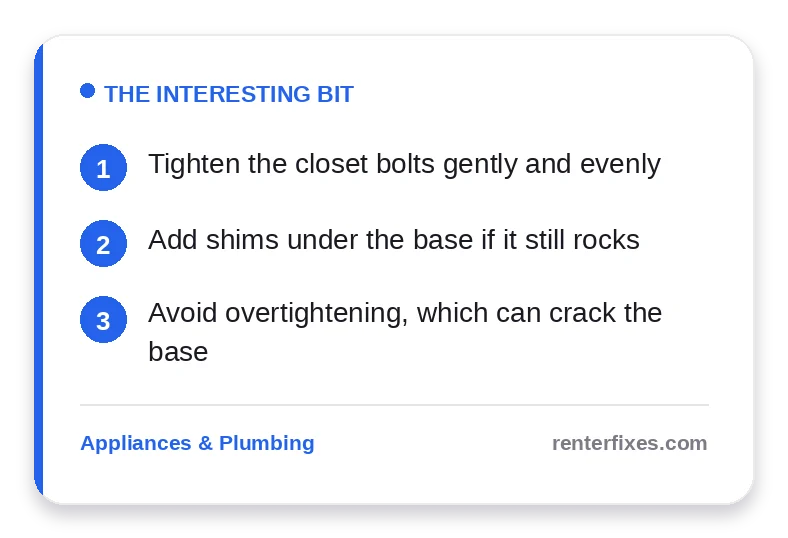
Start with the bolts. A toilet is held down by two bolts at the base, usually hidden under small plastic caps. Pry off the caps and check the nuts; if they are loose, the toilet will rock. Tighten them gently and evenly, a little on each side in turn, until the toilet sits firm. The key word is gently, because the toilet base is porcelain and overtightening one side can crack it, turning a minor wobble into a costly replacement. Snug is the goal, not maximum force.
If the bolts are tight and the toilet still rocks, the floor is uneven and there is a gap under part of the base. The fix is to shim that gap. Plastic toilet shims, slid into the gap and trimmed flush, fill the void so the toilet can no longer move. Insert shims where the gap is, then retighten the bolts to lock everything in place. Once the toilet is solid, a bead of caulk around the base hides the shims and keeps water from getting underneath.
Moving Out Soon?
Get our free room-by-room move-out checklist and keep your deposit.
See the Checklist →Be aware of what a rocking toilet can signal. If the floor around the base feels soft or you see water or staining, the wax seal underneath may already be compromised, which is a bigger repair involving lifting the toilet and replacing the wax ring. That job, and any sign of a rotting subfloor, is worth reporting to your landlord. But for a toilet that simply wobbles on tight bolts, shimming and a careful retighten usually solves it and protects both the fixture and the floor beneath it.
Stop the Rock Before It Cracks the Seal
A toilet that rocks is not just annoying; the movement slowly breaks the wax seal underneath and can lead to leaks that absolutely become your problem at move-out. The usual cause is an uneven floor, not a loose toilet, so the fix is to shim the gap rather than crank the bolts down.
Slide plastic toilet shims into the gap until the bowl sits solid, trim them flush, and only then snug the closet bolts gently. Overtightening is the mistake that cracks the porcelain base, turning a five-minute stabilization into a full toilet replacement. A rock-solid toilet protects both the floor and the seal you would otherwise be billed to repair.
Checking the Wax Ring While You’re Down There
A rocking toilet that’s been left unaddressed for a while is worth a closer look at the wax ring seal underneath, especially if you notice any soft or discolored flooring around the base. A failed wax seal lets water seep under the toilet with every flush, which can damage subflooring over time and turn a $10 shim fix into a much bigger deposit issue. If the floor feels soft, smells musty, or the toilet still rocks after shimming and tightening the bolts, that’s a sign to report it to your landlord rather than keep tightening.
Frequently Asked Questions
How do I stop a toilet from rocking?
Tighten the closet bolts gently and evenly, then add shims if needed.
Why is it rocking?
Usually loose bolts or an uneven floor under the base.
Can I overtighten?
Yes, too much force can crack the porcelain, so go gently.
Related reading
- How to Fix a Running Toilet in Your Rental (No Plumber, No Drama)
- How to Remove Toilet Bowl Stains That Won’t Budge
- How to Fix a Running Toilet in an Apartment (Easy DIY)
- Rental Floor Damage Checklist: What to Fix vs. What to Disclose
Sources & further reading
For the authoritative guidance behind this advice, see:
- HUD — Rental Assistance & Tenant Rights — Tenant rights and rental-assistance guidance by state
- USA.gov — Tenant Rights — How to handle landlord disputes and deposit issues
- EPA WaterSense — Water-efficient faucets, showerheads and fixtures