Tile Floors Need More Than a Mop
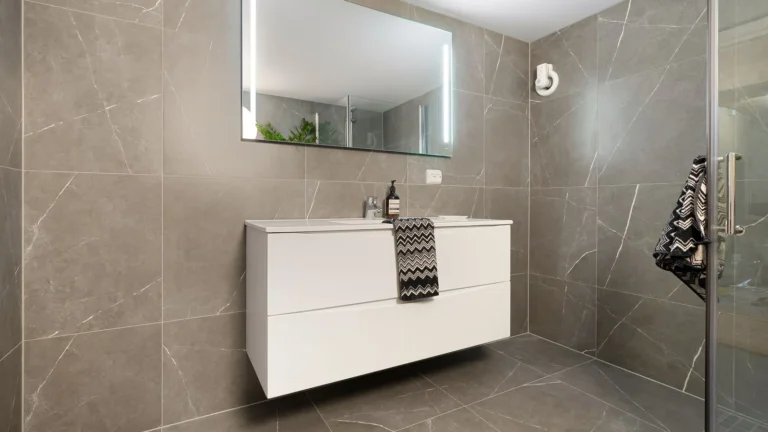
Tile floors look clean at a glance even when the grout is stained, the corners are grimy, and buildup has accumulated in the texture of the tile surface. Landlords look at tile floors closely, particularly in bathrooms and kitchens where moisture and food residue create stubborn buildup. A standard mop cleans the surface but misses the grout lines and edges that are actually inspected. A thorough pre-move-out tile cleaning takes more effort but makes a visible difference.
Start with the Grout
Grout lines are the most commonly flagged issue on tile floor inspections. Grout is porous and absorbs stains over time, turning from white or light gray to dark tan or black. A grout cleaning paste or a grout pen in the original color is the most effective approach. For cleaning, apply a grout cleaner or a paste of baking soda and water to the grout lines, let it sit for 10 minutes, and scrub with a stiff grout brush. Work in sections and rinse thoroughly. For grout that has permanent discoloration beyond what cleaning can address, a grout pen in the matching color covers it and restores a clean appearance.
Cleaning the Tile Surface
After addressing the grout, clean the tile surface itself with a tile-appropriate cleaner. For ceramic tile, a diluted all-purpose cleaner or tile cleaner works well. For natural stone tile (marble, slate, or travertine), use only pH-neutral cleaners since acidic or alkaline products can etch or discolor the surface. Apply the cleaner, scrub with a mop or floor scrubber, and rinse with clean water. Dry the floor with a clean mop or towels to prevent water spots on darker tiles.
Moving Out Soon?
Get our free room-by-room move-out checklist and keep your deposit.
See the Checklist →Corners and Edges
The corners and edges where the floor meets the baseboard collect debris that a regular mop misses. Use a small brush or a detail cleaning tool to clean these areas thoroughly. For built-up grime in corners, a putty knife held at a low angle can scrape out compacted debris before you clean the area with a brush and cleaner.
Bathroom Tile: Extra Attention Required
Bathroom tile floors accumulate soap scum, mildew, and hard water deposits that standard mopping does not remove. Use a bathroom tile cleaner or a diluted vinegar solution (on appropriate tile types) to dissolve mineral deposits. Scrub thoroughly and rinse. The area immediately around the toilet base is inspected carefully, so clean it with detail attention including the grout lines right at the base of the toilet.
Get grout cleaners, tile cleaner, and floor scrubbing tools: tile and grout cleaning supplies on Amazon.
More help: Floors and Carpet guides
How Enzyme Cleaners Work and When to Use Them
Enzyme cleaners have become the go-to for carpet stains because they tackle a category of mess that ordinary detergents simply cannot. Many of the worst carpet stains, pet accidents, vomit, food spills, blood, and sweat, are organic, meaning they are built from proteins, fats, and starches. Enzymes are biological catalysts that break these large molecules into smaller, water-soluble pieces that rinse away, which is why an enzymatic cleaner removes both the stain and the odor instead of just diluting them.
Different enzymes target different messes, and the best multi-purpose cleaners include several. Proteases break down protein-based stains like blood and urine, lipases handle greasy and fatty residues, and amylases tackle starchy food spills. A quality enzyme product blends these so it works across the range of accidents a household produces. For odor specifically, the bacteria in many formulas continue digesting residue after application, which is what removes a smell at its source.
Getting results depends on using them correctly. Enzymes need time and moisture to work, so saturate the stain rather than misting it, and let the product dwell for the full time the label specifies, often ten to fifteen minutes. They also work best at room temperature; very hot water can denature the enzymes and render them useless, so skip the steam until after the enzyme treatment has done its job and rinsed clear.
Enzyme cleaners are not the right tool for every stain. Inorganic stains like rust, ink, or mud do not respond to enzymes and need a different approach. For organic messes, though, they are the most effective and carpet-safe option a renter can keep on hand, and a single bottle handles most household accidents. Test any cleaner on a hidden patch first to confirm it will not affect the carpet color, and store enzyme products away from extreme heat, which can shorten their shelf life and weaken their action.
Why Enzymes Beat Ordinary Cleaners
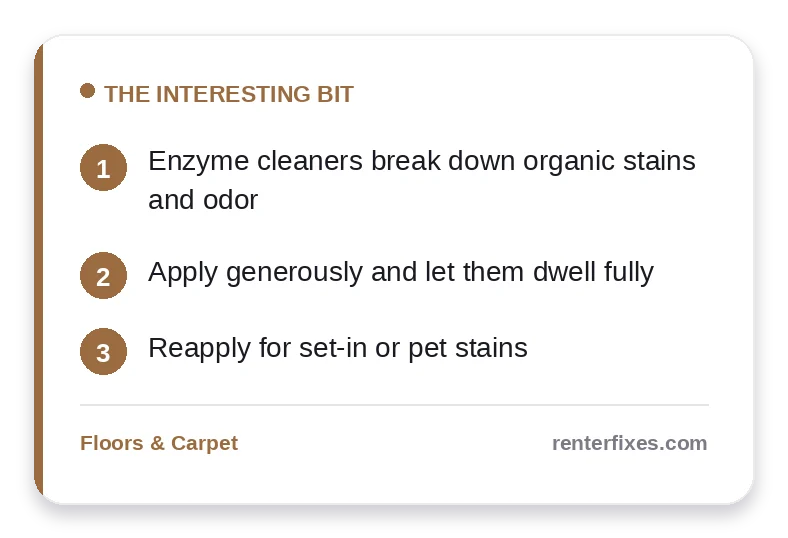
Enzyme cleaners work differently from soaps and oxygen cleaners, and for the stains renters fear most they are the right tool. Instead of bleaching color or lifting grease, enzymes break down the proteins and organic matter in pet accidents, food, and bodily stains, which is why they also kill the odor rather than masking it.
Use them as directed: saturate the spot, let it dwell long enough for the enzymes to do their work, and keep the area from drying out too fast. Skipping the dwell time is the usual reason they seem not to work. Done right, an enzyme cleaner removes both the stain and the smell that would otherwise linger into your inspection.
Frequently Asked Questions
What do enzyme cleaners work on?
Organic stains and odors like pet accidents, food, and drinks.
How do I use them?
Apply generously and let them dwell so the enzymes can work.
Do I need to reapply?
Set-in or pet stains often need a second treatment.
Related reading
- Vinyl Plank Floor Damage: What Renters Need to Know
- The Best Carpet Stain Removers for Renters (Amazon Picks)
- How to Remove Red Wine Stains From Carpet (Step by Step)
- How to Remove Toilet Bowl Stains That Won’t Budge
Helpful resources for renters
Helpful authoritative reading on this topic:
- HUD — Rental Assistance & Tenant Rights — Tenant rights and rental-assistance guidance by state
- USA.gov — Tenant Rights — How to handle landlord disputes and deposit issues
- EPA Safer Choice — EPA-certified safer cleaning products