
Carpet Burns and Holes: Chargeable Damage You Can Repair
Carpet burns and holes from cigarettes, irons, dropped items, or pets are clearly chargeable damage at move-out. Unlike light stains or general wear, burns and holes represent structural damage to the carpet fibers that cleaning cannot address. However, small burns and holes can be repaired effectively using donor carpet from an inconspicuous area, and the repairs are far less expensive than what a landlord will charge for professional repair or partial replacement.
Assessing the Damage
Before attempting a repair, look at the size and location of the burn or hole. A burn that has only singed the very tips of the carpet fibers can sometimes be addressed by carefully trimming the singed tips with small scissors and matching the pile height to the surrounding carpet. This works well for small surface-level burns. A burn or hole that goes through the carpet backing requires a plug repair using replacement carpet material.
The Plug Repair Method
Find a section of matching carpet that can be used as a donor. Good sources include inside a closet where the carpet is hidden from view, under a large appliance, or in a corner behind a door. Using a sharp utility knife, cut out the damaged area in a clean circle or square shape. Cut a matching piece of donor carpet to exactly the same size using the cutout as a template. Apply carpet seam adhesive to the backing of the patch piece and press it firmly into the hole, aligning the pile direction with the surrounding carpet. Weight the patch with a heavy object for several hours while the adhesive cures.
Moving Out Soon?
Get our free room-by-room move-out checklist and keep your deposit.
See the Checklist →Blending the Repair
After the adhesive has cured, the patch edges may be slightly visible. Brush the carpet fibers over the patch edges with a stiff brush to blend the seam. If the donor carpet is slightly different in shade from age or sun exposure, the patch may not be a perfect match, but it will be far less obvious than an open burn or hole. A correctly executed plug repair passes a standard move-out inspection in most cases.
Multiple Burns or Large Damage
If you have multiple burns in a visible area or one large area of damage, consider hiring a professional carpet repair service before move-out. Professional repairs using power stretcher tools and professional-grade seaming tape produce a much more seamless result and cost significantly less than a landlord-arranged carpet replacement. Get a quote in advance to know whether it makes financial sense compared to an estimated deposit deduction.
Find carpet repair kits and seam adhesive for DIY repairs: carpet burn and hole repair supplies on Amazon.
More help: Floors and Carpet guides
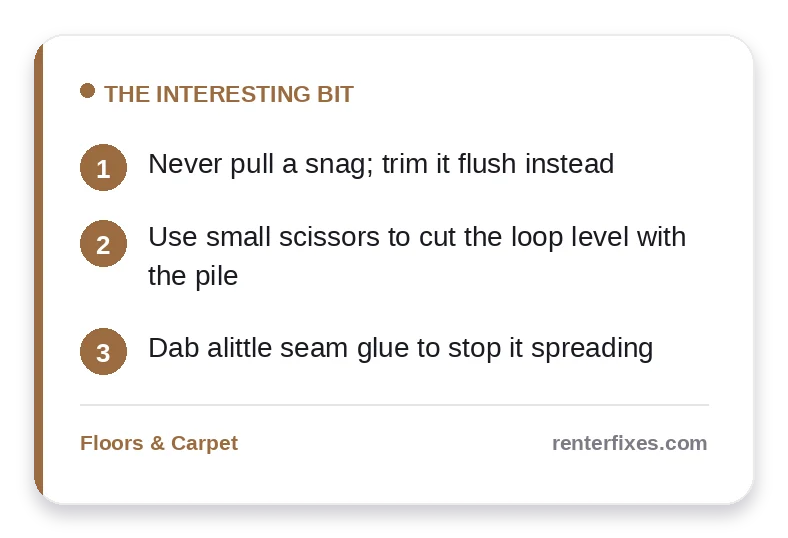
Fixing a Snag or Pull Without Cutting the Loop
A snag is one of the most fixable carpet problems, yet the instinct most people have, grabbing the loose loop and yanking or cutting it, is exactly what turns a minor snag into a visible bald spot or a run. A pulled loop is not damaged carpet; it is intact carpet that has simply been lifted out of place, which means the goal is to coax it back down rather than remove it.
For a single pulled loop in a looped Berber-style carpet, the cleanest fix is to work the loop back down to the height of the surrounding pile and secure it. Use a blunt tool like the eye end of a needle or a small crochet hook to tuck the loop back into the backing. A tiny dab of seam sealer or clear-drying fabric glue at the base holds it in place so it does not pull free again. Never cut a loop in Berber, because cutting one can unravel a whole row.
If a loop has been pulled so far it stands well above the rest and cannot be tucked back, the safer move is to trim it level with the surrounding pile rather than pulling it out, in a cut-pile carpet where individual tufts will not run. Snip it flush with sharp scissors so it blends in. In a cut-pile carpet, a single trimmed tuft is invisible; the danger of running only applies to looped constructions.
Prevention is worth a mention because snags love to repeat. Vacuum cleaners with aggressive beater bars, pet claws, and furniture being dragged are the usual culprits, so lift furniture instead of sliding it and keep the vacuum height set correctly for your carpet. Address snags as soon as you notice them, while it is still a single loop, rather than after foot traffic has worked the pull into a larger flaw that a landlord notices during the final walkthrough.
The single most important rule with a snag bears repeating because the instinct to ignore it is so strong: deal with it the moment you notice it. A single pulled loop is trivial to tuck back or trim, but left alone it catches on a vacuum, a shoe, or a pet and works into a larger pull or a visible run. A two-minute fix today prevents a damaged patch of carpet at move-out, so keep a small crochet hook or blunt needle handy and address pulls as they appear rather than letting them grow.
Frequently Asked Questions
How do I fix a carpet snag?
Trim the snag flush with the pile rather than pulling it.
Why not pull it?
Pulling unravels the loop and makes the damage worse.
How do I stop it spreading?
A dab of seam glue on the cut secures it.
Related reading
- How to Hide Wall Damage You Can’t Fully Repair Before Move-Out
- How to Document Your Apartment Before Moving Out
- How to Deodorize a Rental Apartment Fast Before Inspection
- How to Get Smoke Smell Out of a Rental Apartment
Official guidance & resources
Related official resources:
- USA.gov — Tenant Rights — How to handle landlord disputes and deposit issues
- EPA Safer Choice — EPA-certified safer cleaning products