
Rust Stains: Who Is Responsible and How to Remove Them
Rust stains in bathroom and kitchen fixtures can come from two sources: old or damaged fixtures where the metal itself has corroded (typically the landlord responsibility), or from objects left on fixture surfaces that transferred rust to the porcelain or enamel finish (more likely the tenant responsibility if it occurred during your tenancy). A rusted bath fixture seat, a rust ring from a shaving cream can on the tub ledge, or rust stains around an old drain are all visible inspection targets. Removing surface rust stains before move-out is straightforward with the right products.

Why Standard Cleaners Do Not Work on Rust
Rust stains are iron oxide deposits. Standard all-purpose cleaners and bathroom sprays are not formulated to dissolve iron oxide and scrubbing alone often spreads the stain rather than removing it. Effective rust removal requires either an acidic cleaner that dissolves the iron oxide compound or a reducing agent specifically designed for rust stain removal.
Removing Rust from Porcelain and Ceramic
For rust stains on toilet bowls, tubs, and sinks, a pumice stone or pumice stain remover applied wet is one of the most effective mechanical removal methods. Wet the pumice stone and rub gently in circular motions over the rust stain. Pumice abrades the iron oxide deposit off the surface without scratching porcelain when used wet with light pressure. Commercial rust stain removers containing oxalic acid or hydrofluoric acid are chemical alternatives that dissolve the rust deposit without scrubbing. Follow the product instructions carefully and use in ventilated conditions.
Moving Out Soon?
Get our free room-by-room move-out checklist and keep your deposit.
See the Checklist →Rust Rings Around Drains and Fixtures
Rust rings that form around the base of drain fittings or around old hardware are typically caused by corroding metal. Apply a commercial rust remover gel to the affected area and allow it to dwell for the specified time. The gel formula allows it to cling to vertical or curved surfaces without running off. Wipe away after the dwell time and rinse thoroughly. Repeat if needed for heavier accumulation.
Chrome and Metal Fixture Rust
Surface rust on chrome fixtures from scratching or worn finish can be addressed with a rust-removing product and fine steel wool (0000 grade) used very gently. However, if the chrome plating has failed and the underlying metal is rusting, this is not a cosmetic fix. Report this type of fixture failure to your landlord as a pre-existing condition if it was present when you moved in.
Find rust stain remover products for bathroom and kitchen fixtures: rust stain removal products on Amazon.
More help: Cleaning and Stains guides
Removing Old Adhesive and Tape Residue
The sticky residue left behind by tape, decals, hooks, and labels is frustrating because it grabs dust and turns into a grimy smudge, but it almost always comes off once you soften the adhesive rather than trying to scrape it dry. The right solvent depends on the surface, glass and windows tolerate more aggressive removers than painted walls, so identifying what you are cleaning keeps you from damaging the surface while you free the gunk.
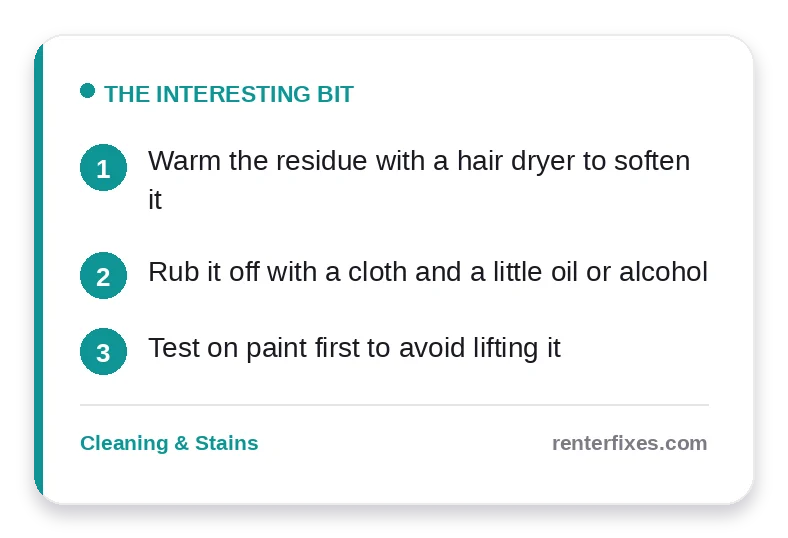
Heat is a gentle universal starting point. Warming the residue with a hair dryer softens the adhesive so it rolls off under your finger or a plastic scraper. For a little more lifting power, common household oils work well: a dab of cooking oil, coconut oil, or even peanut butter rubbed onto the residue and left for a few minutes breaks down the stickiness so it wipes away. These are safe on most surfaces, including painted walls, when used lightly and wiped clean afterward.
On hard, nonporous surfaces like glass, mirrors, and metal, stronger options are available. Rubbing alcohol dissolves many adhesives, and a dedicated citrus-based adhesive remover handles the toughest residue. On a window, you can also soften old adhesive with warm soapy water and then scrape it off carefully with a razor blade held at a low angle, a method that is fast on glass but must never be used on paint, plastic, or finished surfaces it would gouge.
Painted walls demand the gentlest hand, because the same solvents that clean glass can lift paint. Stick to heat, oil, or mild soapy water on walls, work slowly, and test in a hidden spot first. Whatever method you use, finish by washing the area with a little dish soap and water to remove the oily or solvent residue, then dry it, so you are not left with a clean-but-greasy patch. Removing every trace of old adhesive before a walkthrough leaves surfaces looking crisp and keeps a landlord from mistaking a sticky smudge for damage.
Soften Adhesive Instead of Scraping Paint
Old tape residue comes off cleanly when you break the adhesive bond rather than scrape at it, which gouges the paint and creates damage worse than the sticky mark. Warm the spot with a hair dryer to soften the gum, then rub it off with your fingers or a plastic edge.
For what remains, a little cooking oil, rubbing alcohol, or an adhesive remover dabbed on a cloth dissolves the film without harming most painted or glass surfaces. Test paint first in a hidden spot, work gently, and wipe the area clean afterward so no oily residue is left to attract dust before your inspection.
Frequently Asked Questions
How do I remove old tape residue?
Warm it with a hair dryer, then rub it off with a little oil or alcohol.
Will it damage paint or glass?
Test on paint first; on glass it comes off easily.
What if it is stubborn?
Reapply heat and work slowly rather than scraping hard.
Related reading
- How to Remove Crayon or Marker From Walls Without Repainting
- How to Remove Grease Stains From Kitchen Walls in a Rental
- How to Remove Scuff Marks from Walls Without Damaging Paint
- How to Remove Toilet Bowl Stains That Won’t Budge
Further reading
For the authoritative guidance behind this advice, see:
- HUD — Rental Assistance & Tenant Rights — Tenant rights and rental-assistance guidance by state
- USA.gov — Tenant Rights — How to handle landlord disputes and deposit issues
- EPA — Protect Your Family From Lead in Your Home — Lead-paint precautions when sanding or patching pre-1978 walls
- EPA Safer Choice — EPA-certified safer cleaning products