
Window tracks collect a packed mixture of dust, dead insects, dirt, and moisture that hardens into a stubborn crust in the corners. Because the channel is narrow and ridged, a simple wipe never reaches it, and landlords who check tracks notice immediately when a tenant took the time to do it right.

Start Dry, Then Loosen the Grime
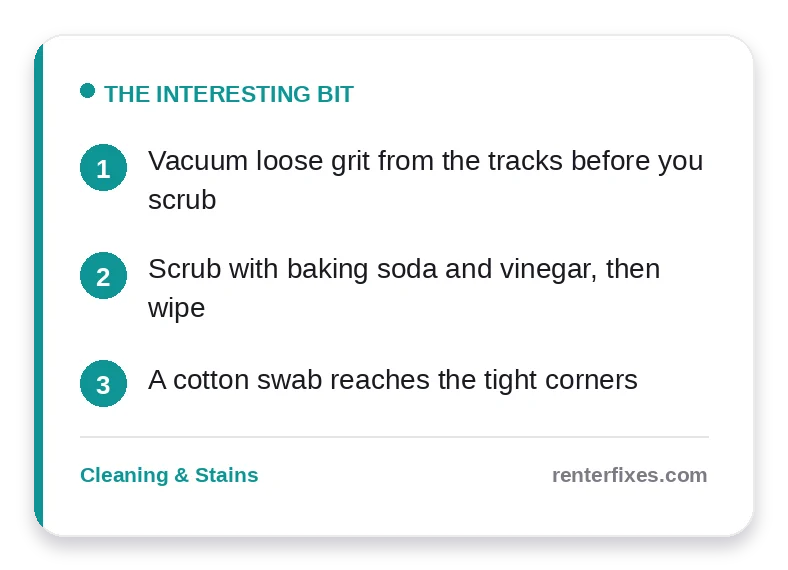
Vacuum out the loose debris first with a narrow crevice attachment. This removes the dry material so it does not turn to mud the moment you add liquid. Then sprinkle baking soda along the track and spray or pour white vinegar over it; the mixture fizzes and lifts the hardened dirt as it sits. Give it several minutes, longer for tracks that have not been cleaned in years, so the crust softens instead of fighting you.
Moving Out Soon?
Get our free room-by-room move-out checklist and keep your deposit.
See the Checklist →Get Into the Corners
The corners are where the worst buildup hides, and they are exactly where a cotton swab, an old toothbrush, or a thin rag wrapped around a flathead screwdriver pays off. Work the loosened gunk toward one spot, then wipe it out. Heavily caked tracks often need a second loosen-and-scrub pass, so repeat if the first round does not get it all.
Dry Completely and Check the Glide
Finish by wiping the tracks with a damp cloth and drying them fully, so no residue or moisture is left to attract new dirt or feed mildew. While you are there, a tiny bit of dry silicone lubricant in the track helps a sticking window glide again. A dry, smooth-sliding track is one more small detail that signals a genuinely thorough clean during the walkthrough.
Screens and Sills While You’re at It
Since you already have the window open, wipe the sill and give the screen a quick vacuum or a rinse if it is removable. A track that is spotless next to a dusty sill or a torn screen still reads as an incomplete job, so finish the whole window in one pass rather than coming back to it later.
Find crevice tools and track-cleaning brushes made for this exact job: window track cleaning tools on Amazon.
More help: Cleaning and Stains guides
Tools That Make a Real Difference
A narrow crevice vacuum attachment does more of the work than any cleaning solution, since it removes the dry grit before you ever add moisture. A small stiff-bristled detail brush, sometimes sold specifically for tracks and grout, reaches corners that a toothbrush cannot quite get into. If your windows have removable screens, popping them out first gives you full access to the sill and track without working around the frame.
How Often This Actually Needs Doing
Window tracks do not need attention during regular cleaning the way counters or floors do, but they should not go untouched for the length of a lease either. A once-a-year pass keeps the buildup manageable, so the move-out clean is a light maintenance job rather than the multi-round excavation described above. If you are inheriting tracks that clearly have not been touched in years, budget extra time and expect to repeat the loosen-and-scrub cycle more than once before they come clean.
Frequently Asked Questions
How do I clean grimy window tracks?
Vacuum loose debris, then scrub with baking soda and vinegar.
How do I reach the corners?
A cotton swab or old toothbrush gets into tight spots.
How often should I do it?
Once before move-out is usually enough for inspection.
Related reading
- Best Products to Clean Baseboards Before Move-Out
- How to Clean Stainless Steel Appliances Without Streaks
- Bathtub Caulk Mold: How to Clean It or Replace It Yourself
- How to Clean Grout in a Rental Bathroom (Landlord-Ready)
Official guidance & resources
Related official resources:
- USA.gov — Tenant Rights — How to handle landlord disputes and deposit issues
- EPA Safer Choice — EPA-certified safer cleaning products