Paint Scuffs on Floors: More Common and More Fixable Than You Think
Paint scuffs on hard floors typically come from a few sources: moving furniture that transfers paint from walls to the floor, dropped paint-covered objects, or scuff marks from painted furniture legs or baseboards. These marks are visible on hardwood, vinyl, and tile floors and can be mistaken for scratches or damage. The good news is that most paint scuffs are surface-level and respond well to cleaning methods that will not harm the floor finish underneath.
Identifying Whether It Is Paint or a Scratch
Run your fingernail across the mark. If the mark is raised above the floor surface or flakes slightly, it is paint. If it is flush with the surface or slightly below, it is likely a scratch. Paint scuffs can be removed. Scratches need a different approach. This distinction matters because applying paint removal methods to a scratch can make it worse or damage the finish layer.
Removing Latex Paint Scuffs
Latex paint, which is water-based and the most common type used in residential interiors, softens with water and isopropyl alcohol. Dampen the scuff with a cloth soaked in warm water and let it sit for a minute. Then rub gently with a cloth dampened with isopropyl alcohol. The paint typically lifts and transfers to the cloth. Work from the edge of the mark toward the center to prevent spreading. Follow with a clean damp cloth and then dry the area thoroughly.
Moving Out Soon?
Get our free room-by-room move-out checklist and keep your deposit.
See the Checklist →Removing Oil-Based Paint Scuffs
Oil-based paint requires a solvent to remove. Mineral spirits on a cloth applied to the scuff and rubbed gently dissolves oil-based paint. Work carefully and in small sections. Clean the area with dish soap and water after removing the paint to eliminate the mineral spirits residue. Ensure good ventilation when using mineral spirits.
After Paint Removal: Checking the Floor Finish
After removing the paint scuff, check whether the floor finish beneath it is intact. Occasionally the process of removing paint can dull a small section of floor finish. For hardwood, a small application of floor polish or hardwood floor cleaner to the affected area can restore the sheen. For vinyl plank, a clean dry buff with a soft cloth typically restores the appearance.
Find floor cleaning products and paint removers for hard floors: floor paint scuff removal supplies on Amazon.
More help: Cleaning and Stains guides
Cleaning Out a Rental Refrigerator Completely
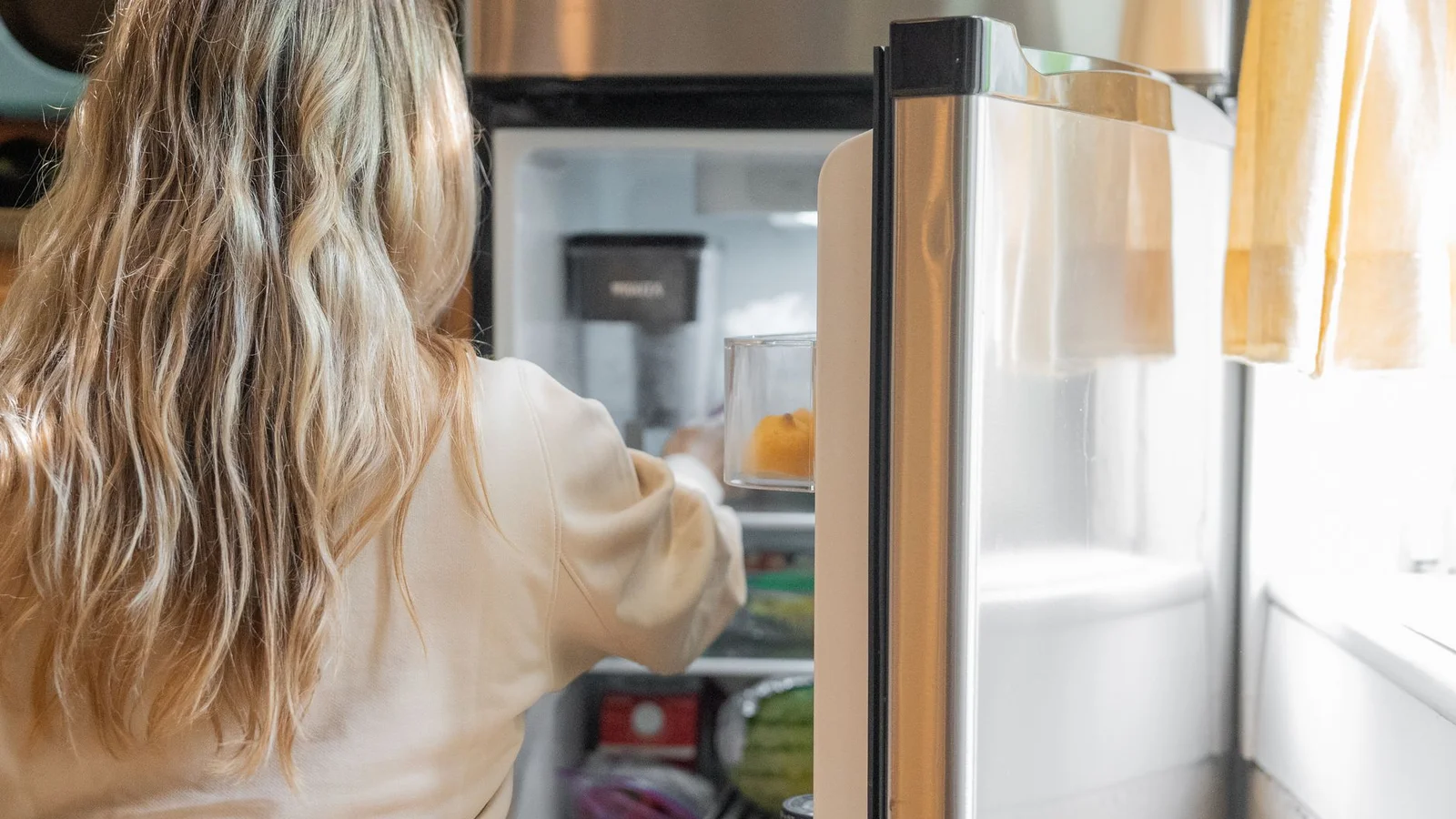
The refrigerator is one of the appliances landlords inspect most closely at move-out, because it is easy to check and tenants frequently leave it half-cleaned, so a fridge returned spotless inside and out makes a strong impression. The job goes fastest when the fridge is empty, which makes the final days of a move the natural time to do it, after you have used up or discarded the food. Unplugging it or turning it off first lets you work without fighting the cold.
Take everything out, including all the removable shelves and drawers, which clean far better in the sink than in place. Wash them with warm soapy water, but let glass shelves come to room temperature before hitting them with hot water, since a cold glass shelf can crack from the sudden temperature change. While they soak, wipe down the entire interior, top, sides, back, and door, with a solution of baking soda and warm water or a little dish soap, which cleans and deodorizes without leaving a chemical smell near food.
Pay attention to the spots that trap spills and odor. The door gaskets collect crumbs and sticky residue in their folds, so wipe into the rubber seal. The drip channels and any vents catch debris. For stuck-on spills, a paste of baking soda lifts them without scratching. Once the interior is clean, dry it thoroughly and replace the shelves and drawers, then deodorize by wiping with a vinegar solution or leaving an open box of baking soda inside if the unit will sit before the next tenant.
Do not neglect the outside and the often-forgotten areas. Clean the door handles and exterior, wipe the top of the fridge where greasy dust collects, and if you can move the unit, vacuum the condenser coils and clean the floor beneath it, which is usually filthy and very visible once the fridge is pulled out. A refrigerator that is clean inside, outside, behind, and underneath leaves nothing for an inspector to flag, and it is one of the higher-value cleaning tasks for protecting a deposit.
Don’t Forget the Parts Landlords Check First
A rental fridge can look clean and still cost you a deduction if you skip the spots inspectors actually open. Pull out the crisper drawers and shelves and wash them in the sink, wipe down the door gaskets where grime hides, and clean the condiment shelves on the door that tend to get sticky and overlooked.
Finish by addressing odor, not just visible grime. Leave the fridge running with the door propped if you are cleaning the day before handover, and set an open box of baking soda inside. A unit that smells neutral and looks spotless inside signals you cared for the appliance, which is exactly the impression that protects your deposit.
Frequently Asked Questions
How do I clean a rental fridge before leaving?
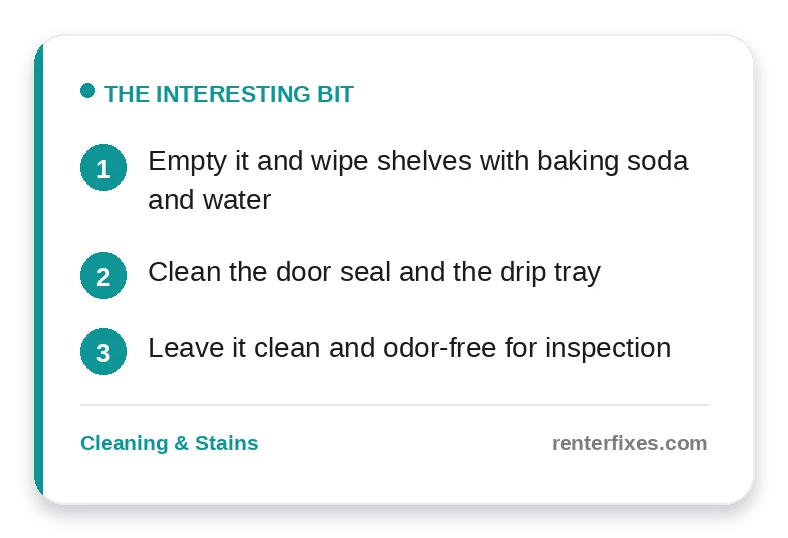
Empty it and wipe the shelves with baking soda and water.
What do people miss?
The door seal and the drip tray.
Should it be odor-free?
Yes, leave it clean and fresh for inspection.
Related reading
- How to Deodorize a Rental Apartment Fast Before Inspection
- Rental Wall Repair Checklist: Everything to Fix Before Move-Out
- How to Fix Scuffed and Scratched Rental Floors Without Losing Your Deposit
- How to Fix a Running Toilet in Your Rental (No Plumber, No Drama)
Helpful resources for renters
A few reputable resources that back up the steps above:
- HUD — Rental Assistance & Tenant Rights — Tenant rights and rental-assistance guidance by state
- ENERGY STAR — HVAC Maintenance Checklist — Keeping HVAC and filters in good shape
- EPA Safer Choice — EPA-certified safer cleaning products