Scuff marks are not damage to the wall itself, just material transferred onto the paint from shoes, furniture, luggage, or hands, which is good news because they almost always come off without any patching at all. The mistake renters make is attacking them too hard with the first thing under the sink, which can burnish a glossy spot or strip paint and turn a cosmetic mark into a real repair.
Start With the Gentlest Option
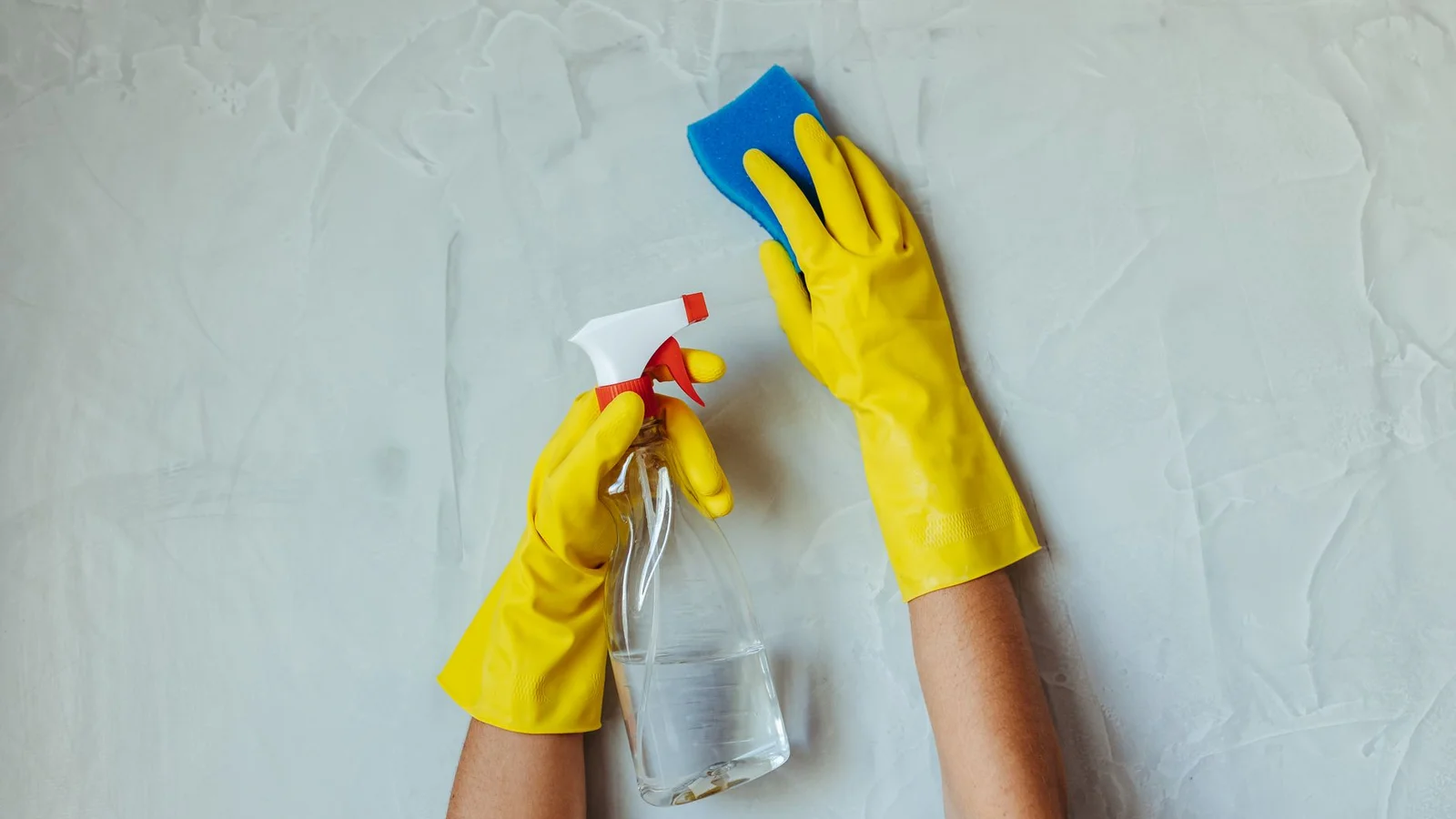
Begin with a damp microfiber cloth and a little plain water, rubbing in small circles. Many black scuffs from rubber soles or chair legs lift with water alone. If the mark resists, move to a drop of dish soap on the damp cloth, or a paste of baking soda and water, which provides just enough mild abrasion to release stubborn marks without cutting into the paint underneath. Work the edges inward so you do not spread the scuff into clean paint around it.
Moving Out Soon?
Get our free room-by-room move-out checklist and keep your deposit.
See the Checklist →The Melamine Eraser: Effective but Risky
A melamine foam eraser is the most effective tool for tough scuffs, but it is also a very fine abrasive, so use it carefully. Test it on a hidden area first, keep it barely damp, and use the lightest pressure that works, because on flat or matte paint it can polish a subtly shinier patch that shows up in raking light. After any cleaning method, wipe the area with clean water to remove residue and let it dry before deciding whether the spot needs another pass.
Paint Finish Changes the Rules
Flat and matte paints are the most sensitive to abrasion of any kind, since even light scrubbing can burnish a slightly glossier spot that stands out under certain light. Eggshell and satin finishes tolerate a bit more scrubbing before that happens. Semi-gloss and gloss, most common in kitchens and bathrooms, are the most durable and can generally handle a melamine eraser with less risk. Knowing which finish is on your walls, and testing gently before committing to a method, prevents turning a scuff into a shiny patch that is arguably more noticeable than the original mark.
Matching the Method to the Cause
A greasy smudge near a light switch responds better to a degreasing cleaner than to abrasion, since scrubbing just spreads oily residue rather than lifting it. A gray or silver streak is often metal transfer from a chair or table leg and lifts easily with an eraser or a dab of mild solvent. Crayon and marker need their own dedicated approach, usually a specific solvent or rubbing alcohol rather than soap and water, since they are pigment rather than surface grime. Recognizing which of these you are actually dealing with, rather than defaulting to the same method for every mark, saves time and reduces the risk of making a mark worse.
When a Mark Genuinely Won’t Budge
If a true scuff will not lift after gentle escalation through water, soap, and a careful pass with an eraser, a fast dab of matching touch-up paint over the spot is quicker and safer than continuing to scrub through the finish and creating a bare patch you then have to prime. Apply it with a small brush or a folded piece of foam, feathering the edges so the fresh paint blends rather than creating a visible square.
Clean First, Repair Second
The guiding principle for any wall mark is to separate cleaning from repair and try cleaning first. A scuff is surface material that wipes away, so it almost never needs paint or filler, and reaching for a touch-up brush before trying a damp cloth or an eraser just creates more work. Only when a mark genuinely will not lift without thinning the paint does a small dab of matching color become the right call.
Preventing New Scuffs Going Forward
Felt pads or rubber bumpers on chair and furniture legs, door stops that keep knobs from swinging into the wall, and a habit of setting bags and shoes down rather than leaning them against a wall all cut down on new scuffs considerably. If you are still mid-lease rather than actively moving out, a few dollars of felt pads applied now means less scrubbing and far less risk of a shiny patch by the time you actually do move.
Find magic erasers and touch-up paint supplies for wall scuffs: wall scuff removal supplies on Amazon.
More help: Walls and Patching guides
Testing Before You Commit
Always test a new method on a small, low-visibility section first, like inside a closet or behind a door, before applying it to a visible wall. Paint that looks identical across a room can react differently to cleaning depending on subtle variations in how and when it was applied, and a five-minute test avoids discovering a problem in the middle of your living room wall.
What Actually Counts as a Chargeable Mark
Ordinary scuffs from normal living, the kind that come off with cleaning, are squarely within normal wear and tear in most jurisdictions and should not be charged against a deposit whether or not you get to them before move-out. What can turn into a legitimate charge is paint you stripped or burnished through overly aggressive cleaning, or a mark you attempted to touch up with a mismatched paint color that now stands out more than the original scuff would have. This is part of why starting gentle and escalating only as needed matters: an overzealous first attempt can convert a non-issue into an actual repair.
A Room-by-Room Approach
Rather than chasing scuffs the moment you spot them, walk each room once with a flashlight held at an angle to catch marks that flat lighting hides, and note anything that needs attention. Then work through the marks in one focused pass per room using the gentlest method first, escalating only where needed. This is faster overall than treating scuffs as they are noticed throughout the move-out process, and it means you handle each wall exactly once instead of returning to the same spot with increasingly aggressive tools.
A Simple Materials List
A microfiber cloth, a small bottle of dish soap, baking soda, a melamine eraser, and a small tube or bottle of matching touch-up paint cover essentially every scuff-removal scenario described here. None of it is specialized or expensive, and the same basic kit works for scuffs throughout the entire apartment rather than needing different products per room.
What This Typically Costs
A full scuff-removal pass across an average apartment, including the occasional touch-up dab where cleaning alone was not enough, usually costs under ten dollars in materials, most of which you may already have at home. Compare that to a landlord charging a repainting fee for marks that would have wiped away with a damp cloth, and the time investment, typically well under an hour for a full unit, is clearly worth it.
How This Differs From Actual Wall Damage
It is worth distinguishing scuffs from genuine paint damage before you start, since treating a chip or a gouge as a scuff wastes time on the wrong technique. A scuff sits on top of the paint and lifts away entirely with cleaning, leaving the original paint underneath untouched. A chip or gouge has actually removed paint or the surface beneath it, and no amount of scrubbing will restore that; it needs spackle and touch-up paint instead. If cleaning does not visibly lift a mark at all after a couple of honest attempts, it is more likely a chip than a stubborn scuff, and switching to a repair approach rather than continuing to scrub saves both time and the paint finish.
One Last Pass Before the Walkthrough
Walk the apartment once in bright daylight rather than evening lamp light, since flat overhead lighting hides exactly the kind of low-contrast scuff that a walkthrough inspector will catch by chance from a different angle. Bring your move-in photos along so you can quickly confirm whether any remaining mark predates your tenancy before spending more time on it.
Handling Multiple Rooms Efficiently
If scuffs are scattered across several rooms rather than concentrated in one, carry your cleaning kit with you room to room instead of making separate trips back to the kitchen sink each time. Working the whole apartment in one continuous pass, starting with the gentlest method everywhere before escalating only where needed, is noticeably faster than fully resolving one room before moving to the next, since you build a feel for how the paint responds and can move faster once you know what to expect.
One More Reminder
Whatever method you land on, patience beats force every time with paint. A slower, gentler pass that takes an extra few minutes almost always outperforms an aggressive scrub that finishes faster but risks the finish underneath.
Frequently Asked Questions
How do I remove scuff marks from walls?
A magic eraser used gently lifts most scuffs without repainting.
Will it damage the paint?
It can dull flat finishes, so test in a hidden spot first.
What about stubborn marks?
A little dish soap and water on a soft cloth often works.
Related reading
- How to Remove Crayon or Marker From Walls Without Repainting
- How to Remove Old Tape Residue From Walls and Windows
- How to Remove Grease Stains From Kitchen Walls in a Rental
- How to Touch Up Wall Paint Without It Looking Patchy
Sources & further reading
For the authoritative guidance behind this advice, see:
- USA.gov — Tenant Rights — How to handle landlord disputes and deposit issues
- EPA — Protect Your Family From Lead in Your Home — Lead-paint precautions when sanding or patching pre-1978 walls