
Diagnosing a Running Toilet by Its Parts
A toilet that runs constantly or cycles on its own is wasting water around the clock, and the cause is almost always one of two parts in the tank: the flapper or the fill valve. Lifting the tank lid and watching one flush reveals which. The mechanism is simple once you see it work, and the replacement parts are inexpensive and sold at any hardware store, making this one of the most satisfying rental fixes you can do yourself.
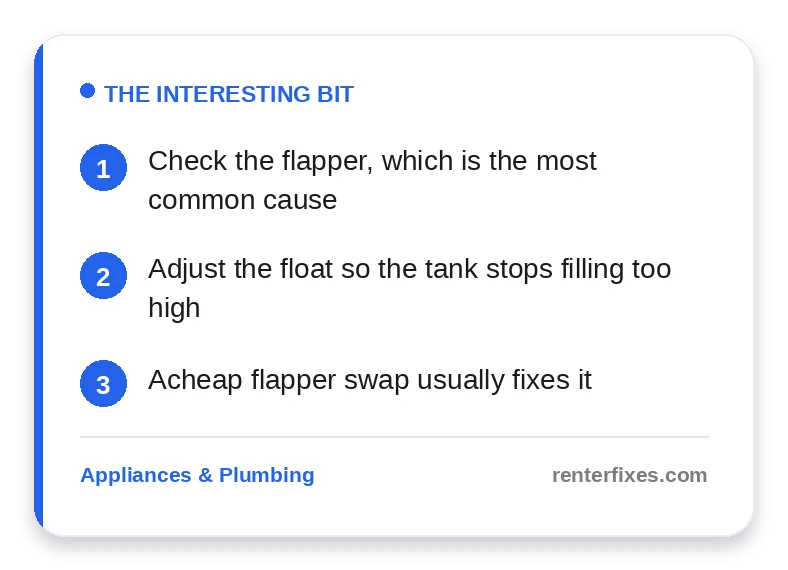
The flapper is the rubber seal at the bottom of the tank that lifts to release water into the bowl and then drops to reseal. Over time it warps, stiffens, or builds up mineral deposits so it no longer seats tightly, letting water trickle continuously into the bowl. If you hear a faint hiss or see water moving in the bowl between flushes, the flapper is the likely culprit. Unclip the old one, take it to the store to match, and snap the new one onto the same pegs and chain.
The fill valve refills the tank after a flush and shuts off when the water reaches the set level. If it fails to shut off, water rises until it spills into the overflow tube and drains away, causing a constant refill cycle. Check whether the water level is set too high; bending or adjusting the float so the valve shuts off about an inch below the top of the overflow tube often solves it. If the valve will not stop running even at the right level, replacing the whole fill valve is a straightforward swap.
Moving Out Soon?
Get our free room-by-room move-out checklist and keep your deposit.
See the Checklist →The chain that connects the flush handle to the flapper deserves a look too. A chain that is too long can slip under the flapper and hold it open, while one too short keeps it from sealing; adjusting the chain to a small amount of slack fixes both. These repairs take minutes and use universal parts, but if your tank has corroded fittings or the leak is at the tank-to-bowl connection rather than inside, that is worth flagging to your landlord rather than forcing.
While you have the tank open, glance at a couple of details that prevent repeat problems. Mineral buildup on an old flapper keeps it from sealing, so a flapper that looks warped or crusted is worth replacing even if it is only leaking slightly. Check that the refill tube clipped to the overflow is not jammed down inside it, which can siphon water continuously. These small parts are inexpensive and universal, but a tank with corroded fittings or a leak at the tank-to-bowl bolts is worth reporting rather than forcing apart.
If Replacing Parts Doesn’t Fix It
If you’ve replaced the flapper and adjusted the fill level but the toilet still runs, the flush valve seat itself may be worn or mineral-scarred, which prevents even a brand-new flapper from sealing properly. This is a slightly bigger repair than a renter is typically expected to handle, and it’s a reasonable point to report the issue to your landlord rather than keep swapping parts. Mention specifically that you’ve already replaced the flapper, since that tells maintenance the problem is likely the valve seat and saves them a diagnostic trip.
Frequently Asked Questions
Why does my toilet keep running?
A worn flapper is the most common cause.
How do I fix it?
Replace the flapper or adjust the float so the tank stops overfilling.
Is it an easy fix?
Yes, a flapper is cheap and swaps in within minutes.
Related reading
- How to Fix a Running Toilet in Your Rental (No Plumber, No Drama)
- How to Document Your Apartment Before Moving Out
- How to Deodorize a Rental Apartment Fast Before Inspection
- How to Get Smoke Smell Out of a Rental Apartment
Helpful resources for renters
Related official resources:
- HUD — Rental Assistance & Tenant Rights — Tenant rights and rental-assistance guidance by state
- EPA WaterSense — Water-efficient faucets, showerheads and fixtures