Lifting a Red Wine Stain Before It Sets
Red wine is one of the most feared carpet stains because its deep pigment grabs onto fibers fast, but speed and the right sequence give you a strong chance of removing it completely, especially while it is still fresh. The first move is to blot, never rub. Press a clean white cloth or paper towels straight down to absorb as much wine as possible, working from the outside of the spill inward so you do not spread it into clean carpet.
Once you have lifted the excess, dilute what remains. Pour a small amount of cool water over the stain and blot again, repeating to draw the pigment up out of the fibers. Cool water is important, because hot water can set the tannins and lock the color in. Keep blotting with fresh sections of cloth until the towel stops picking up red, which tells you the diluted wine is coming out rather than just smearing around.
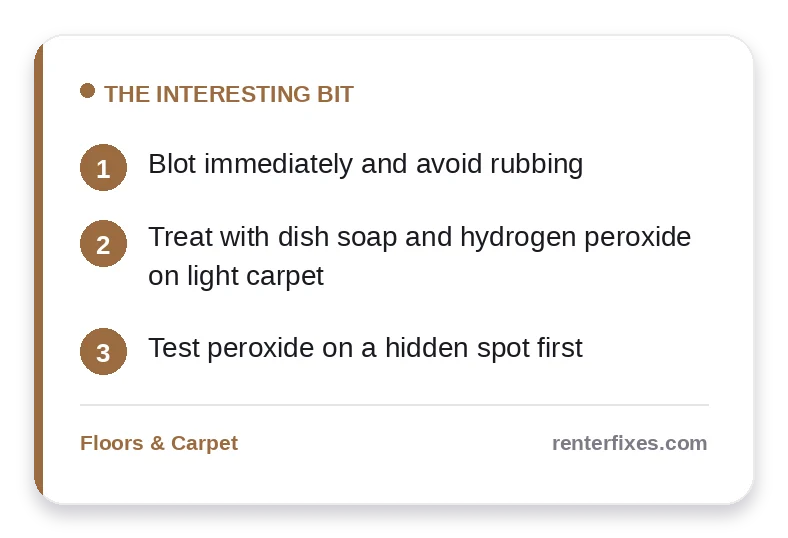
For the color that resists plain water, a cleaning solution does the rest. A mixture of dish soap and a little white vinegar in cool water, dabbed on and blotted, breaks down red-wine pigment well. Hydrogen peroxide is more powerful and works on stubborn dried stains, but it can lighten some carpets, so always test it on a hidden area first. Apply your chosen solution, let it sit briefly, then blot and rinse with cool water.
Moving Out Soon?
Get our free room-by-room move-out checklist and keep your deposit.
See the Checklist →A dried red wine stain is harder but not always hopeless. Re-wet it thoroughly to loosen the pigment, then work through the same dish-soap-and-vinegar or peroxide approach with patience, repeating the cycle several times. An enzyme or oxygen-based carpet cleaner can also help with set stains. Whatever you use, finish by rinsing the area with cool water and blotting it dry so no cleaning residue stays behind to attract dirt, leaving a spot that looks clean rather than trading a red ring for a gray one.
Act Fast and Blot, Never Rub
Red wine on carpet is beatable if you reach it before it sets. Blot up as much as you can immediately with a clean cloth, working from the outside of the spill inward so you do not spread the stain. The goal is to lift liquid, not grind it deeper, so press and lift rather than scrub.
Then treat what is left in stages: cool water, a dab of dish soap, and for a stubborn ring, an oxygen-based or enzyme cleaner tested on a hidden patch first. Patience beats force here. A few gentle repetitions pull the color out without fraying the pile, while hard rubbing leaves a worn spot a landlord will read as damage.
If the Stain Has Already Dried
Fresh wine responds well to blotting and a cold water or club soda rinse, but a stain that’s had time to set needs a different approach. Mix a small amount of dish soap with hydrogen peroxide (test on a hidden corner first, since peroxide can lighten some dyes) and work it into the stain with a clean cloth, blotting rather than scrubbing outward. Patience matters more than product here: repeated light treatments over a day or two lift a set-in stain far better than one aggressive scrubbing session, which can just push the wine deeper into the carpet fibers.
Frequently Asked Questions
How do I remove a red wine stain from carpet?
Blot it, then treat light carpet with dish soap and hydrogen peroxide.
Should I scrub it?
No, blot only; scrubbing spreads the stain and damages fibers.
Will peroxide bleach my carpet?
Test on a hidden spot first, since it can lighten some carpets.
Related reading
- How to Remove Toilet Bowl Stains That Won’t Budge
- How to Remove Grease Stains From Kitchen Walls in a Rental
- How to Remove Black Mold Stains from Grout Between Floor Tiles
- The Best Enzyme Cleaners for Carpet Stains Renters Need to Know
Further reading
For the authoritative guidance behind this advice, see:
- HUD — Rental Assistance & Tenant Rights — Tenant rights and rental-assistance guidance by state
- EPA Safer Choice — EPA-certified safer cleaning products