
Doors That Stick or Do Not Latch Are a Common Inspection Flag
During a move-out inspection, landlords open and close every door in the unit. A door that sticks, does not close flush, fails to latch, or drags on the floor will be noted. In most cases these issues have simple mechanical causes and can be fixed without any specialized tools or carpentry experience. Addressing door problems before your inspection removes them from the deduction list entirely.

Diagnosing the Problem
Before fixing anything, identify exactly what the door is doing. Open and close it slowly and watch where it sticks or binds. Check whether it is the door itself dragging on the frame or floor, or whether it is the latch not engaging the strike plate correctly. Feel the hinges while moving the door to see if any are loose or not fully seated. Most door problems fall into one of three categories: loose hinges, a misaligned latch, or a door that has swollen from humidity.
Loose Hinges
Loose hinges are the most common cause of doors that do not close properly. Open the door and tighten all hinge screws with a screwdriver. If a screw spins without tightening, the screw hole has stripped. Remove the screw, push a wooden toothpick or two into the hole with a small amount of wood glue, let it dry for an hour, then reinstall the screw. The toothpicks give the threads something to bite into and the repair holds well.
Moving Out Soon?
Get our free room-by-room move-out checklist and keep your deposit.
See the Checklist →Misaligned Latch and Strike Plate
If the door closes but does not latch, hold the door in the closed position and look at where the latch bolt meets the strike plate. If it is catching on the edge of the plate rather than going through the hole cleanly, the strike plate needs to be repositioned slightly or the hole needs to be enlarged. Use a metal file to slightly enlarge the strike plate hole in the direction the latch is hitting. This usually requires only a few strokes and resolves the issue permanently.
Swollen Doors
Humidity causes wood doors to swell and stick seasonally. If the door sticks in a specific spot along the edge, you can feel the binding by running your hand along the edge while applying gentle pressure. A few passes with a hand plane or a belt sander on the sticking edge will remove enough material to allow the door to close freely. This requires a bit more skill but is straightforward if the binding area is accessible with the door on its hinges.
Checking All Doors Before Move-Out
Test every interior and exterior door in the unit: bedroom doors, bathroom doors, closet doors, pantry doors, and the front door. Open and close each one fully and confirm the latch engages. A single pass through all doors takes five minutes and catches issues you might not have noticed during normal use.
Get the tools for door repairs and hardware fixes: door repair tools on Amazon.
More help: Walls and Patching guides
Which Wall Damage Actually Costs You at Move-Out
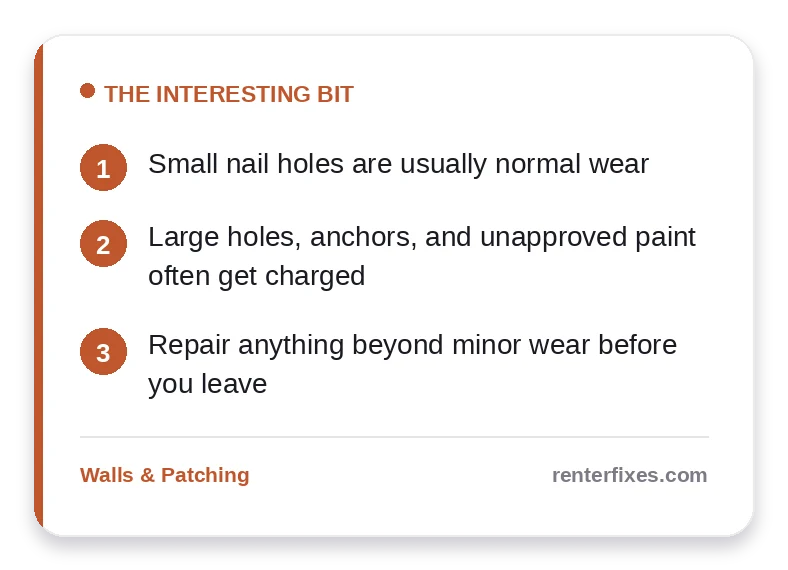
Landlords cannot legally charge you for ordinary wear, but the line between wear and chargeable damage on walls is where many deposit disputes happen. A handful of small nail or pushpin holes, light scuffing along a hallway, and faded paint after a long tenancy generally fall under normal wear and tear, the unavoidable result of someone living in the unit. Charging a tenant to repaint simply because the walls show age is something most state laws do not permit, especially after a multi-year lease.
What does get charged is damage that goes beyond everyday use. Large or numerous anchor holes, a doorknob hole punched through the drywall, crayon or marker drawings, unapproved paint colors the landlord has to prime over, and walls left greasy or heavily marked all qualify as damage you are responsible for. The cost is not just materials; landlords bill for contractor labor, which is why a repair that would cost you a few dollars in spackle can show up as a line item many times higher on your deposit itemization.
The age of the paint also affects what a landlord can fairly claim. Many jurisdictions recognize that interior paint has a limited useful life, often a few years, after which its value is considered fully depreciated. If the walls were last painted long before you moved in, a landlord may have little standing to bill you for repainting even where there is some damage, because the paint was near the end of its life anyway. This is one reason documenting the condition and approximate age of the paint at move-in is so useful.
The practical takeaway is to fix what you reasonably can and document the rest. Patch and touch up holes and scuffs before the final walkthrough, because a wall you have repaired well is one fewer thing a landlord can deduct for. For anything you genuinely cannot match, like a textured wall or an accent color you painted with permission, compare the cost of doing it yourself against the deduction you would likely face. Photos of the walls at move-in and move-out are your strongest protection if a landlord later claims pre-existing wear was damage you caused.
Frequently Asked Questions
What wall damage will my landlord charge for?
Large holes, anchors, unapproved paint, and significant marks usually count as damage.
Are nail holes charged?
Small nail holes are generally normal wear, but patch them anyway.
How do I avoid charges?
Repair anything beyond minor wear before you move out.
Related reading
- How to Hide Wall Damage You Can’t Fully Repair Before Move-Out
- How to Patch a Nail Hole in an Apartment Wall (No Landlord Needed)
- How to Patch Nail Holes So Your Landlord Never Sees Them
- What to Do With Furniture Damage You Caused in a Rental
Official guidance & resources
A few reputable resources that back up the steps above:
- USA.gov — Tenant Rights — How to handle landlord disputes and deposit issues
- EPA — Protect Your Family From Lead in Your Home — Lead-paint precautions when sanding or patching pre-1978 walls