
Carpet Stains Are the Number One Deposit Deduction
Of all the reasons renters lose security deposit money, carpet stains top the list. Landlords can and do charge for professional cleaning or even partial carpet replacement when stains are present at move-out. The frustrating part is that most carpet stains can be fully removed or significantly reduced with the right products and technique. Leaving stains that could have been treated is one of the most avoidable deposit losses there is.


Act Quickly on Fresh Stains, but Old Stains Are Also Treatable
Fresh stains are easiest to remove because the substance has not fully bonded with the carpet fibers. If you still have time before move-out, treat fresh spills immediately by blotting (not rubbing) up as much liquid as possible, then applying a carpet stain remover. For old stains that have been sitting, they require a deeper treatment but are still often removable with the right approach.
General Stain Removal Process
For most stains, start by dampening the area with cold water and blotting up as much of the stain as possible. Apply a commercial carpet stain remover according to the product instructions, allowing it to dwell for the recommended time before blotting. Work from the outside of the stain inward to prevent spreading. Rinse with cold water and blot dry. Allow to dry completely before checking the result. Some stains require a second treatment after the first has dried.
Moving Out Soon?
Get our free room-by-room move-out checklist and keep your deposit.
See the Checklist →Specific Stain Types
Red wine and juice stains respond well to an enzyme-based cleaner or a mixture of dish soap and hydrogen peroxide applied to white carpet. Pet stains require an enzyme-based cleaner specifically formulated for pet waste, which breaks down the organic compounds causing both the stain and the odor. Grease stains respond to dish soap worked into the fibers with a brush before rinsing. Coffee stains can often be removed with a commercial enzyme cleaner or a white vinegar and water solution.
When to Rent a Steam Cleaner
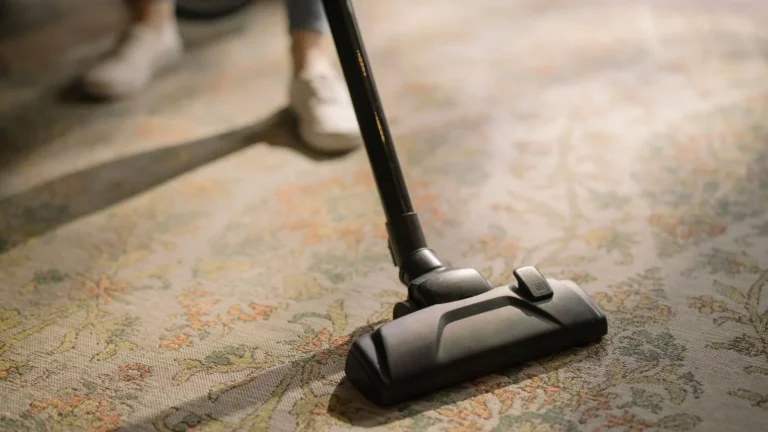
If you have multiple stains or large areas of general soiling, renting a carpet steam cleaner is worth the cost. Steam cleaners are available at most grocery stores and hardware stores for around 30 to 50 dollars per day. Steam cleaning the entire carpet eliminates not just visible stains but also the general ground-in dirt that makes carpets look dull and old. A steam-cleaned carpet makes a dramatically better impression during inspection than a vacuumed-only carpet with a few obvious stains.
Find carpet stain removers and cleaning products for move-out: carpet stain remover products on Amazon.
More help: Floors and Carpet guides
Repairing a Carpet Burn Without Replacing the Carpet
A small burn from a dropped cigarette, a curling iron, or an iron leaves a scorched, melted spot that looks alarming but is often repairable without replacing a single section of carpet. The fix depends on how deep the damage goes. A superficial burn that only browned the very tips of the fibers can sometimes be saved by snipping off the discolored tips with small scissors, which removes the scorch and lets the undamaged fiber below stand up to hide the spot.
For a deeper burn that has melted or destroyed the fibers all the way down, the technique is to transplant matching fibers. Carefully cut away the damaged tuft down to the backing, then harvest replacement fibers from a hidden area such as inside a closet or under a baseboard where the carpet will never be seen. Apply a small amount of carpet adhesive into the cleared spot and set the donor fibers in by hand, arranging them to match the height and direction of the surrounding pile.
An even cleaner option for a larger burn is a plug repair. Using a small cookie-cutter style carpet repair tool, cut a circular plug out of the burned area and an identical plug from a hidden donor spot, then glue the fresh plug into the hole. Press it level with the surrounding carpet and let the adhesive cure fully. Done carefully, the repair blends into the pile and is invisible from standing height.
Move quickly and discreetly with a burn before a walkthrough, but be realistic about the result. A neat fiber transplant or plug on a small burn usually passes unnoticed, while a large melted area may need professional attention or honest disclosure to your landlord. Either way, addressing it yourself first almost always costs far less than the carpet-replacement charge a landlord would otherwise bill, and the donor-fiber trick is a genuinely effective skill worth knowing for any renter with carpeted floors.
Match your effort to the visibility and size of the burn before you start cutting. A tiny scorch in a closet or under where furniture sits may not be worth an elaborate transplant, while a burn in the middle of a living-room floor justifies the careful fiber or plug repair. Be realistic, too, about a large melted area: if the damage is bigger than a coin, a do-it-yourself repair may be noticeable, and disclosing it to your landlord for a fair, materials-based charge can beat a botched fix that ends up looking worse than the original burn.
Frequently Asked Questions
Can I fix a carpet burn myself?
A small burn can be repaired by trimming the charred fibers and patching.
Where do I get matching fibers?
Snip a few from a hidden area like inside a closet.
How do I attach them?
Glue the donor fibers into the spot with carpet seam adhesive.
Related reading
- How to Patch Nail Holes So Your Landlord Never Sees Them
- How to Do a Move-Out Walkthrough Before Your Landlord Does
- How to Get Furniture Dents Out of Carpet Before Move-Out
- What to Do If Your Landlord Keeps Your Security Deposit Unfairly
Sources & further reading
A few reputable resources that back up the steps above:
- USA.gov — Tenant Rights — How to handle landlord disputes and deposit issues
- EPA Safer Choice — EPA-certified safer cleaning products