Squeaky Floors: More Fixable Than You Think
A squeaky or loose floorboard is not always your responsibility in a rental. In many cases, squeaks develop from seasonal wood movement or gradual loosening of the subfloor connection that predates your tenancy. However, if the squeak was caused by water damage you introduced, a loose board you created by moving heavy furniture repeatedly, or damage you know occurred during your tenancy, addressing it before move-out is the right move. Even if the cause predates you, fixing a squeak you know about removes it from the inspection report.
Diagnosing the Squeak
Walk slowly over the squeaking area and identify exactly which board or boards produce the sound. Note where on the board the squeak is strongest. A squeak at the edge of a board usually means the board is rubbing against its neighbor. A squeak in the middle of a board usually means it has separated from the subfloor beneath and flexes when stepped on.
Fixing a Squeak from Above: Hardwood Floors
If the squeaky board is hardwood, you can often fix it from above without removing any flooring. A powdered lubricant like talcum powder or a powdered graphite product can be worked into the gaps between boards to reduce friction. Sprinkle the powder along the joint and work it in with your foot by walking back and forth. This works well for squeaks caused by boards rubbing against each other.
Moving Out Soon?
Get our free room-by-room move-out checklist and keep your deposit.
See the Checklist →For Squeaks From Subfloor Separation
If the board is flexing because it has separated from the subfloor, screwing through the floor from above is an effective fix for hardwood plank floors. Drill a pilot hole slightly smaller than the screw diameter to prevent splitting the board. Drive a floor screw into the subfloor at an angle. Fill the screw head with a color-matched wood filler and sand flush. This type of repair is more permanent and typically invisible after the filler is applied and sanded.
Laminate and Vinyl Plank Squeaks
Floating floors like laminate and vinyl plank squeak when the planks shift and rub against each other or against the subfloor. These squeaks are often related to expansion gaps that have been covered by furniture or trim. Ensure there is adequate expansion gap around the perimeter of the room. Working a small amount of powder lubricant between planks at the squeak location can reduce friction.
Find floor lubricants and repair supplies for squeaky floors: squeaky floor fix products on Amazon.
More help: Floors and Carpet guides
Repairing a Cracked Tile and Knowing When to Stop
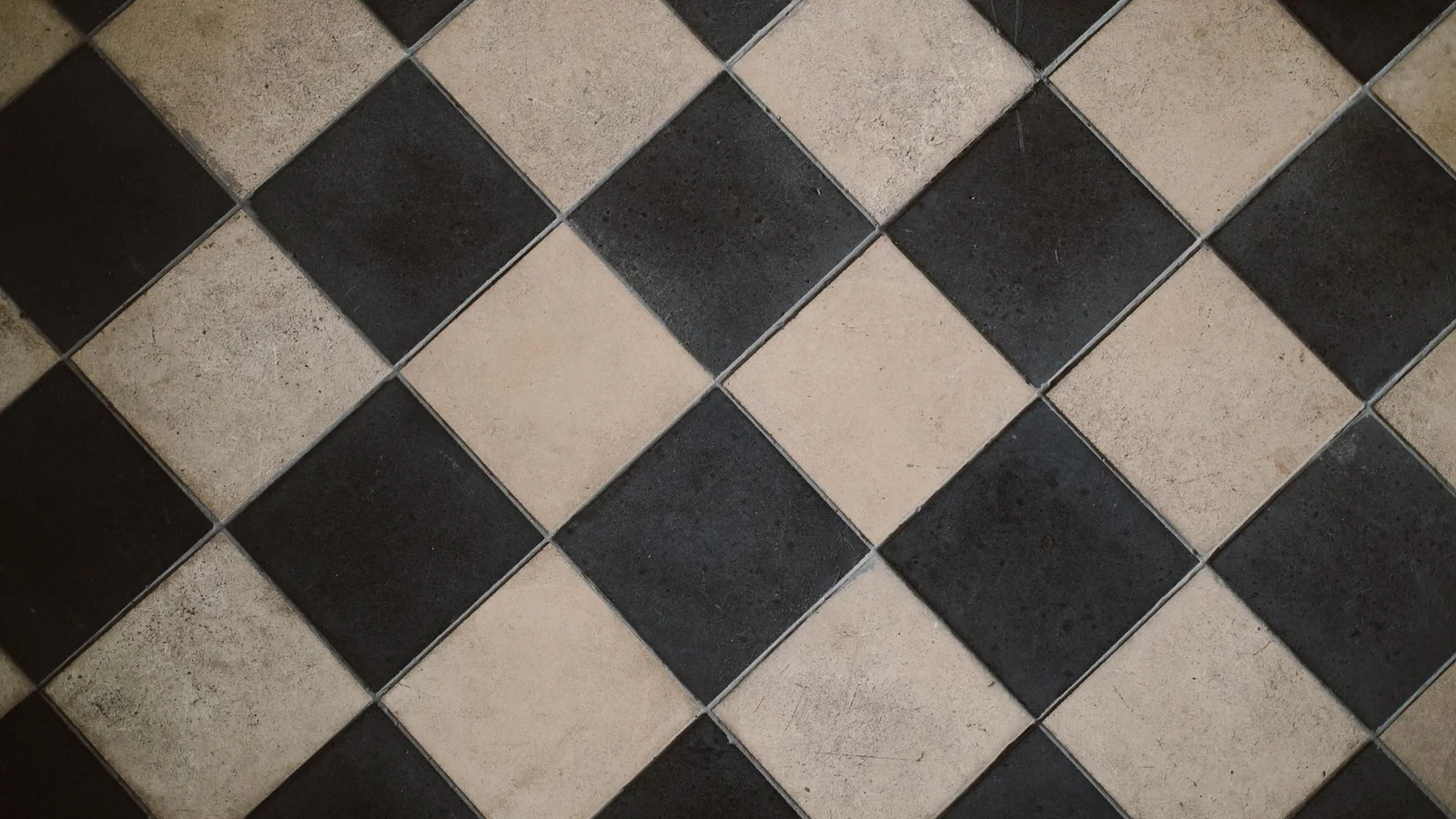
A cracked floor tile in a rental presents two questions: can you make it look acceptable, and is a full replacement worth attempting? For a hairline crack with the pieces still firmly in place, the least invasive fix is to fill the crack so it stops collecting dirt and becomes far less noticeable. A two-part epoxy or a tile-and-grout filler tinted to match, worked into the crack and wiped flush, can make a thin crack nearly disappear without disturbing the tile.
Clean the crack thoroughly first so the filler bonds. Wipe out any dust and grime, let it dry, then apply the filler in a thin bead and smooth it level with the tile surface before it sets. For glossy tiles, a dab of clear epoxy or a matching glaze over the cured filler restores some shine so the repaired line does not read as a dull streak. Touch-up glaze kits made for ceramic exist for exactly this purpose.
Replacing a tile entirely is a bigger commitment that involves chiseling out the broken tile, scraping the old thinset, setting a new matching tile in fresh adhesive, and re-grouting around it. The hardest part is usually sourcing a tile that matches, since rental floors are often older discontinued styles. If you have spare tiles left in a closet or basement by the landlord, replacement becomes realistic; without a match, a replacement tile can stand out more than the crack.
Be honest with yourself about scope before you start chiseling, because a half-finished tile repair is harder to explain than the original crack. If the crack is structural, spreading, or accompanied by a loose or hollow-sounding tile, that can signal a subfloor issue that is the landlord’s responsibility, and it is worth reporting rather than patching over. For a simple cosmetic crack, a careful fill is usually all a walkthrough requires and far cheaper than the tile-replacement charge a landlord would otherwise assess.
Before you commit to any repair, find out whether matching materials even exist, because that single fact often decides the whole approach. Check closets, the basement, and storage areas for spare tiles the builder or landlord may have left, and look for a manufacturer name or style on the back of a loose tile. If a match is available, replacement becomes realistic; if not, a careful color-matched fill that leaves the tile in place is usually the smarter play than a mismatched replacement that draws more attention than the crack did.
One last caution: a crack that keeps widening, a tile that sounds hollow when tapped, or several cracked tiles in a row can signal movement in the subfloor beneath rather than a simple surface break. That is a structural issue and the landlord’s responsibility, so report it instead of repeatedly filling cracks that will only return. A single stable cosmetic crack is yours to fill; a spreading pattern is a maintenance request.
Frequently Asked Questions
Can I repair a cracked tile myself?
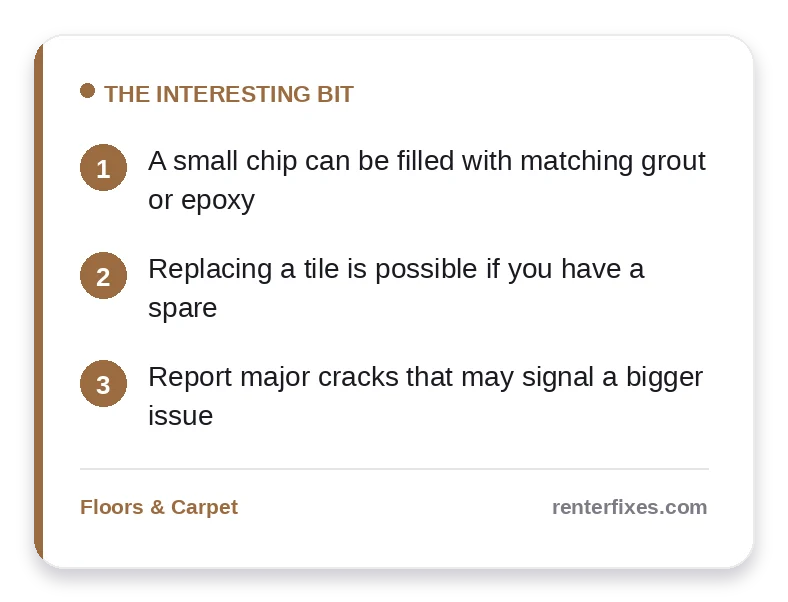
A small chip can be filled with matching grout or epoxy.
What if the whole tile is cracked?
You can replace it if a spare exists, or report it.
When should I tell my landlord?
Major cracks may signal a subfloor issue worth reporting.
Related reading
- Rental Wall Repair Checklist: Everything to Fix Before Move-Out
- How to Fix Scuffed and Scratched Rental Floors Without Losing Your Deposit
- How to Fix a Running Toilet in Your Rental (No Plumber, No Drama)
- What to Do With Furniture Damage You Caused in a Rental
Helpful resources for renters
A few reputable resources that back up the steps above:
- HUD — Rental Assistance & Tenant Rights — Tenant rights and rental-assistance guidance by state