
When a Landlord Wrongfully Withholds Your Deposit
If your landlord keeps your deposit without providing an itemized list of deductions, misses the legally required return deadline, or charges you for normal wear and tear, you have real options. Security deposit law in most states strongly favors tenants when landlords fail to follow proper procedures.

Know the Timeline First
Every state has a deadline by which a landlord must return your deposit or provide a written itemized explanation of deductions. This deadline ranges from 14 to 45 days depending on your state. If your landlord misses this deadline, they may forfeit the right to make any deductions at all, even if damage existed. Look up your state’s specific deadline.
Start With a Written Demand
Send your landlord a demand letter by certified mail and email. State that you are requesting the return of your deposit of $[amount] within [state deadline] days, reference the specific state statute by name, and note that failure to comply may result in legal action. Keep your documentation attached. Many landlords pay up at this stage rather than go to court.
Moving Out Soon?
Get our free room-by-room move-out checklist and keep your deposit.
See the Checklist →File in Small Claims Court
Security deposit disputes are among the most common small claims court cases and are straightforward to file. You do not need a lawyer. Bring your move-in and move-out photos, your move-out letter, your demand letter, and a copy of your lease. Many states allow tenants to recover two or three times the withheld deposit amount as a penalty if the landlord acted in bad faith.
Contact a Tenant Rights Organization
If the amount is significant or the situation is complex, contact a local tenant rights organization or legal aid clinic. Many offer free consultations and can advise on whether your case is strong enough to pursue.
Leave Reviews and File Complaints
If your landlord manages multiple properties, leaving factual reviews on Google and relevant rental listing sites creates accountability. You can also file a complaint with your local housing authority or state attorney general’s consumer protection office.
Protect yourself from the start with thorough documentation supplies: home documentation tools on Amazon.
More help: Moving Out Checklist guides
Escalating When a Landlord Wrongfully Withholds
When a landlord keeps part or all of your deposit without justification, you have a clear escalation path, and following it in order maximizes your odds of recovery while keeping the matter civil as long as possible. The first step is to understand exactly what you are owed and on what grounds the landlord is withholding. Most states require the landlord to provide an itemized written statement of deductions within a set number of days; if you received vague or no itemization, that failure itself often strengthens your position.
Begin with a formal demand letter, which resolves many disputes without further escalation. Write to the landlord stating the amount you believe is wrongfully withheld, referencing your move-out condition and documentation, and citing the relevant deposit law and deadlines in your state. Keep it factual and professional, attach copies of your evidence such as move-out photos and the move-in inspection, and give a reasonable deadline to return the funds. Send it in a trackable way and keep a copy, since a landlord who sees you are organized and informed frequently settles rather than fight.
If the demand letter does not work, small claims court is the standard next step and is designed for exactly this situation. The process is built for self-representation, filing fees are low, and security-deposit cases are among the most common claims heard. Your move-in and move-out documentation, the itemized statement or its absence, and your demand letter become your evidence. Many states also provide penalties against landlords who withhold deposits in bad faith or miss the return deadline, which can increase what you recover beyond the deposit itself.
Before filing, check whether your local or state tenant resources can help. Tenant rights organizations, legal aid groups, and the state attorney general’s office often publish guides to deposit law and sometimes offer assistance, and knowing the specific protections and deadlines in your jurisdiction sharpens your case. Strong documentation remains the foundation throughout: the clearer your proof of the condition you left the unit in, the harder it is for a landlord to defend an unjustified deduction, whether the matter settles after a letter or goes before a judge.
Know the specific deposit law in your state before you escalate, because the details are your leverage. Most states set a firm deadline, often two to four weeks, for the landlord to return the deposit or provide an itemized statement, and many impose penalties on landlords who miss it or withhold in bad faith, sometimes well beyond the deposit amount. Citing the exact statute and deadline in your demand letter signals that you know your rights, which alone resolves many disputes before they ever reach small claims court.
How to Push Back Without Escalating
If a landlord withholds part of your deposit unfairly, start in writing and stay factual. Send a short, dated letter or email requesting an itemized statement of deductions, which most states require landlords to provide within a set window. Asking for the breakdown alone resolves many disputes, because vague charges often shrink once they have to be justified line by line.
Pair your request with your own evidence: move-out photos, receipts for repairs you made, and a copy of the move-in condition report. Keep the tone businesslike rather than angry. If the deduction still does not hold up, small claims court is designed for exactly this and does not require a lawyer.
Frequently Asked Questions
What if my landlord unfairly keeps my deposit?
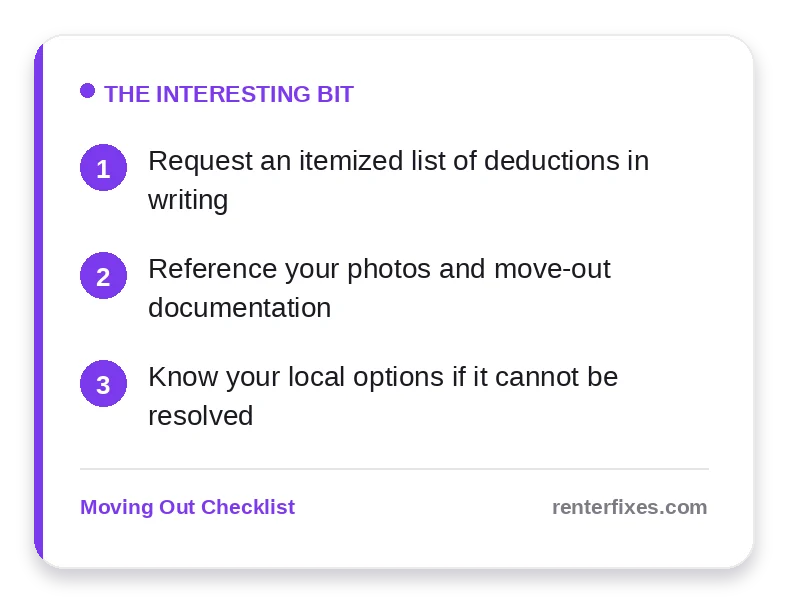
Request an itemized list of deductions in writing.
How do I dispute it?
Reference your photos and documentation, and know your local options.
Can I get it back?
Often, with good documentation and persistence through the proper channels.
Related reading
- How to Get Your Full Security Deposit Back
- How to Fix Scuffed and Scratched Rental Floors Without Losing Your Deposit
- How to Patch Nail Holes So Your Landlord Never Sees Them
- Renter Move-Out Mistakes That Cost You Your Deposit
Official guidance & resources
For the authoritative guidance behind this advice, see:
- HUD — Rental Assistance & Tenant Rights — Tenant rights and rental-assistance guidance by state
- USA.gov — Tenant Rights — How to handle landlord disputes and deposit issues