Post-Pest Cleanup: What You Are Responsible For
Dealing with a pest infestation in a rental raises responsibility questions that depend on the lease and local law. Infestations from pests that were already in the building when you moved in, or that entered through structural gaps in the building, are generally the landlord responsibility. Infestations attracted by unsanitary conditions during your tenancy (food left out, garbage not removed, standing water) place more responsibility on you. In either case, leaving a rental with evidence of a pest infestation or unsanitary post-infestation conditions creates deduction risk. Understanding how to clean properly after pests protects you at move-out.
Cockroach and Rodent Cleanup
After extermination, thoroughly clean all surfaces where pest activity occurred. For cockroach activity, this typically means kitchen cabinets, behind appliances, under the sink, and drawer interiors. Wipe all surfaces with a disinfectant cleaner. Vacuum crevices in cabinets and drawers with a crevice attachment to remove debris, dead insects, and egg casings. Dispose of the vacuum bag immediately in an outdoor trash container.
Rodent Droppings: Safe Cleanup Protocol
Rodent droppings require careful handling due to the risk of hantavirus and other pathogens. Do not sweep or vacuum droppings dry since this can aerosolize the particles. Instead, put on rubber gloves and a dust mask. Spray the droppings with a disinfectant solution (one part bleach to ten parts water) and let soak for five minutes. Wipe up with paper towels and seal in a plastic bag before disposing. Clean the entire area with disinfectant and wash your hands thoroughly afterward.
Moving Out Soon?
Get our free room-by-room move-out checklist and keep your deposit.
See the Checklist →Bed Bug Cleanup
Bed bug cleanup after extermination involves washing all bedding, curtains, and fabric items in hot water and drying on the highest heat setting. Vacuum the mattress, box spring, bed frame, and floor thoroughly. Steam cleaning mattresses and furniture is effective for killing any remaining bugs the extermination may have missed. Seal the vacuum bag in a plastic bag immediately after vacuuming.
Documentation and Disclosure
If the pest infestation occurred during your tenancy and you reported it in writing to your landlord, you have documentation that the issue was addressed through proper channels. Keep copies of all pest-related communication with your landlord. If you did not report the infestation and it is a significant issue, consider disclosing it before move-out and discussing the cleanup and remediation steps you have taken.
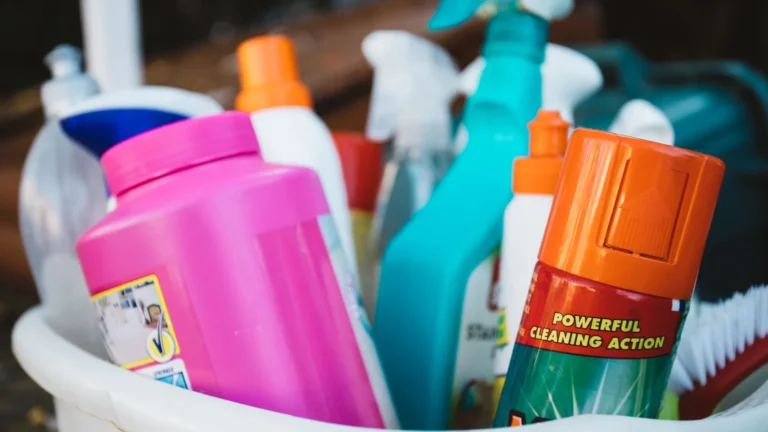
Find disinfectant cleaners and pest cleanup supplies: pest cleanup supplies on Amazon.
More help: Cleaning and Stains guides
Eliminating Smoke Odor at Its Source
Smoke smell, whether from cigarettes, cooking, or a past incident, is so hard to remove because the odor particles embed themselves in every porous surface, walls, carpet, curtains, and even inside cabinets, and continue releasing the smell for a long time. Masking it with air fresheners only layers a scent on top; truly removing it means cleaning the surfaces that hold the odor and treating the air. This is a deep-clean problem, not a quick spray.
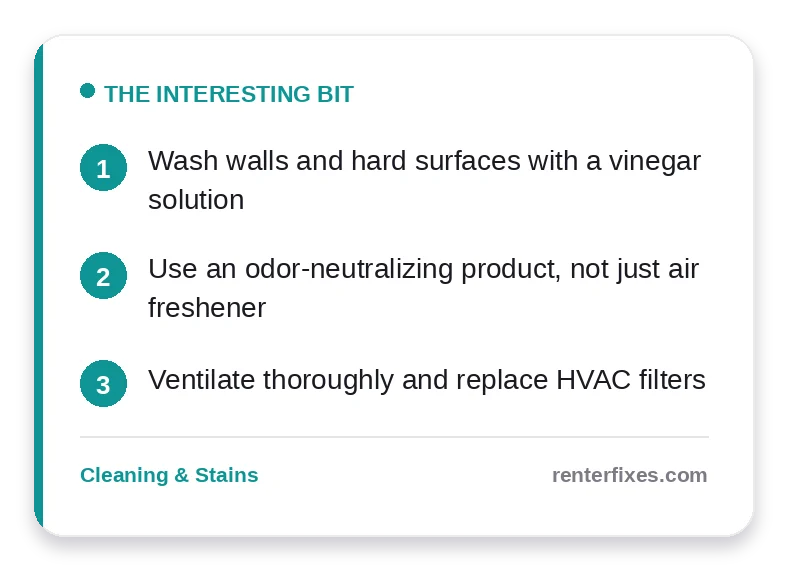
Ventilation is the foundation. Open every window, run fans to move air through the space, and keep the apartment aired out throughout the process, because fresh air carries odor particles away as you loosen them. While the air moves, wash the hard surfaces that absorbed the smoke. Wiping down walls, ceilings, doors, and the inside of cabinets with a solution of white vinegar or a dedicated odor-cutting cleaner removes the film that smoke leaves and the odor trapped in it.
Soft surfaces hold the most odor and need their own treatment. Sprinkle baking soda generously over carpet and any upholstered items, let it sit for hours or overnight to absorb the smell, then vacuum it up. Fabric items like curtains should be washed if possible. Setting out bowls of baking soda, white vinegar, or activated charcoal around the room absorbs lingering airborne odor over a few days, quietly pulling the smell out of the air rather than covering it.
For smoke that has deeply penetrated, especially in a unit where someone smoked heavily indoors, walls may need to be sealed with a stain-and-odor-blocking primer before repainting, since the odor can keep bleeding through ordinary paint. That is a larger job often coordinated with a landlord. For more typical smoke odor, the combination of thorough ventilation, washing hard surfaces, treating soft ones with baking soda, and time usually clears it. Tackling it well before a move-out inspection matters, because a lingering smoke smell is one of the fastest ways to leave a bad impression and invite a cleaning deduction.
Pull Smoke Out of Soft Surfaces
Smoke smell clings to anything porous, so wiping hard surfaces only gets you partway. Walls and ceilings hold residue and may need a wash with a vinegar or degreaser solution, and any fabric left in the unit, from blinds to a forgotten curtain, will keep releasing odor until it is cleaned or removed.
Ventilation and time finish the job. Air the unit out with windows open and a fan running, set out bowls of activated charcoal or baking soda to absorb what is left, and repeat over a couple of days for a heavy case. If the smell soaked into the paint itself, a primer-sealer before repainting is what finally locks it away.
Frequently Asked Questions
How do I get smoke smell out of a rental?
Wash walls and hard surfaces with vinegar and use an odor neutralizer.
Does air freshener work?
It only masks the smell; you need to clean and neutralize the source.
What else helps?
Ventilate thoroughly and replace the HVAC filter.
Related reading
- How to Deodorize a Rental Apartment Fast Before Inspection
- How to Get Rid of Roach or Ant Smell in a Rental Kitchen
- How to Match Paint Color in a Rental Apartment
- How to Fix Scuffed and Scratched Rental Floors Without Losing Your Deposit
Further reading
A few reputable resources that back up the steps above:
- HUD — Rental Assistance & Tenant Rights — Tenant rights and rental-assistance guidance by state
- EPA Safer Choice — EPA-certified safer cleaning products