Drain Odors at Move-Out: A Deduction You Can Prevent
A foul-smelling drain is immediately noticeable when a landlord enters the bathroom or kitchen and is consistently cited in move-out cleaning notes. Drain odors come from accumulated organic matter in the drain trap: hair, soap scum, food particles, and biological film that develops over time on the walls of the drain pipe. Eliminating the odor requires both physical cleaning to remove the accumulation and treatment to kill the bacteria producing the smell. This is a 20 to 30 minute task per drain.
The Most Common Drain Odor Causes
Bathroom sink and shower drains produce odor primarily from hair and soap buildup coating the inside of the trap and pipe. The combination of these organic materials and moisture creates an environment where bacteria thrive and produce sulfur-based compounds that smell like rotten eggs or sewage. Kitchen sink drains produce odors from food particles and grease coating the trap and pipe walls. A dry or rarely used drain (like a guest bathroom sink) may smell from a dry P-trap that is no longer holding water to block sewer gases.
Physical Cleaning First
Before applying any treatment product, physically remove as much of the organic material as possible. For bathroom drains, use a drain cleaning tool (the flexible plastic barbed type) to pull hair and debris out of the drain. Remove the stopper if present and clean the pivot rod mechanism. For kitchen drains, pour boiling water down the drain to melt and flush grease buildup, then follow with a dish soap flush.
Moving Out Soon?
Get our free room-by-room move-out checklist and keep your deposit.
See the Checklist →Baking Soda and Vinegar Treatment
Pour half a cup of baking soda into the drain, followed by half a cup of white vinegar. The fizzing reaction helps break up organic residue on the pipe walls. Allow it to work for 15 to 20 minutes, then flush with hot water. This is effective for mild to moderate odors and is safe for all drain types.
Enzyme Drain Treatment for Persistent Odor
For stronger persistent odors, an enzyme-based drain cleaner is more effective than a chemical approach. Enzyme cleaners contain beneficial bacteria that consume the organic material causing the odor. Apply per the product instructions, typically pouring into the drain at night and allowing to work without water running for several hours. Repeat treatments over several days if needed for established odor. This approach also keeps the drain flowing freely.
Find enzyme drain cleaners and drain cleaning tools: drain odor removal products on Amazon.
More help: Cleaning and Stains guides
Soaking Oven Racks Clean Instead of Scrubbing
Oven racks come out of a neglected oven coated in baked-on carbon and grease that seems impossible to scrub off, but the secret is to let a soak do the work so you barely scrub at all. The chemistry is simple: a long soak in warm water with the right additive softens and lifts the burnt residue, after which it wipes away with a fraction of the effort that dry scrubbing demands. Plan for an overnight soak and the actual labor shrinks to minutes.
The bathtub is the ideal vessel because the racks lay flat and fully submerge, though a large utility sink or even a plastic tub works. Lay a towel down first to protect the tub surface from scratches, set the racks on it, and fill with hot water until they are covered. Then add your cleaning agent. A generous amount of dish soap cuts the grease, while a half cup of baking soda or a few dishwasher detergent tablets dissolved in the water boost the lifting power for heavier buildup.
For really stubborn, years-old carbon, a different approach uses ammonia in a sealed bag, but it must be done with care and ventilation: place a rack in a heavy trash bag with a small amount of ammonia, seal it, and leave it outside or in a well-ventilated area overnight so the fumes loosen the residue without you breathing them. Open the bag outdoors. This method is powerful but demands respect for the fumes and is best reserved for racks the gentler soak cannot handle.
After soaking, the residue should wipe or lightly scrub away with a sponge or a non-scratch scrub pad. Rinse the racks thoroughly to remove all cleaner, dry them, and slide them back into a clean oven. Doing the racks at the same time you clean the oven interior, with both soaking while you handle other move-out tasks, makes efficient use of the dwell time. Clean oven racks in a clean oven are exactly the kind of detail a landlord checks, so the soak-and-wipe method is well worth the overnight wait.
Let the Soak Do the Scrubbing
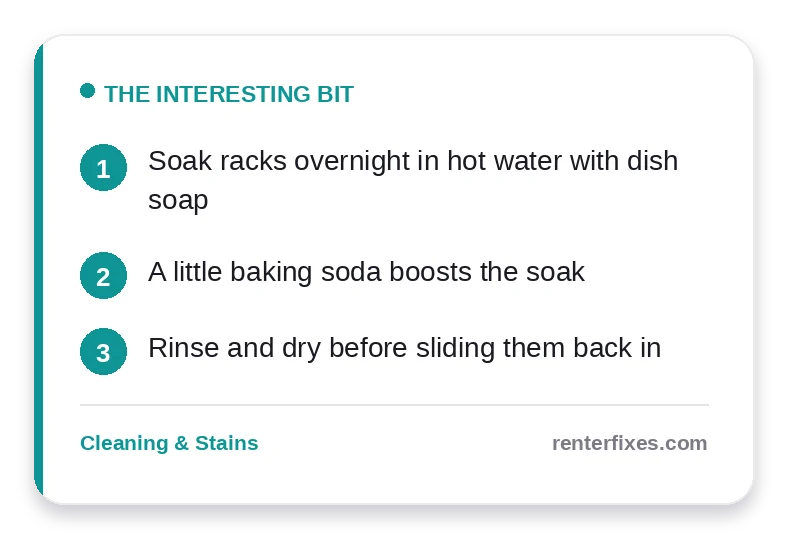
Oven racks come clean with chemistry instead of elbow grease. Lay them in a bathtub lined with old towels, cover them with hot water, and add either dish soap and baking soda or a couple of dryer sheets, then leave them overnight. The long soak loosens baked-on grease so it wipes away in the morning.
Protect the tub and yourself while you do it: the towels keep the metal racks from scratching the enamel, and gloves spare your hands from the grime. Rinse and dry the racks completely before sliding them back in, because trapped moisture can flash-rust the bare metal and leave marks on the oven floor.
Frequently Asked Questions
How do I clean oven racks without scrubbing?
Soak them overnight in hot water with dish soap.
Does baking soda help?
Yes, adding baking soda boosts the soak on baked-on grime.
What do I do after soaking?
Rinse and dry before sliding them back in.
Related reading
- How to Clean Stainless Steel Appliances Without Streaks
- How to Deep Clean Carpet in a Rental Without a Machine
- How to Fix Scuffed and Scratched Rental Floors Without Losing Your Deposit
- How to Clean Window Tracks That Are Caked With Grime
Helpful resources for renters
For the authoritative guidance behind this advice, see:
- HUD — Rental Assistance & Tenant Rights — Tenant rights and rental-assistance guidance by state
- EPA Safer Choice — EPA-certified safer cleaning products