Why Touch-Ups Look Patchy and How to Avoid It
A touch-up that ends up more visible than the mark it covered is one of the most common frustrations renters face, and it almost always comes down to one of three causes: the wrong sheen, paint that does not match the aged wall, or applying fresh paint over an unprimed patch. Understanding which of these is working against you turns a patchy mess into a repair that genuinely disappears, and usually it is a combination of all three that betrays an amateur job.
Sheen is the most overlooked factor. Flat and matte paints hide touch-ups beautifully because they scatter light, while eggshell, satin, and semi-gloss reflect it and make any new paint read as a glossy island. If your walls have any sheen at all, a small dab will catch the light from across the room. The fix is to feather the touch-up thinly and, when that is not enough, repaint the entire wall from one corner to the next so there is no visible seam.
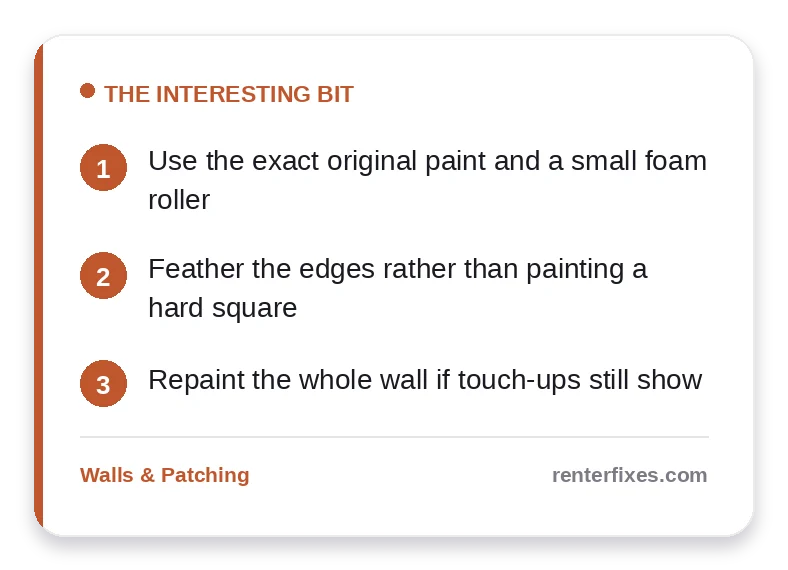
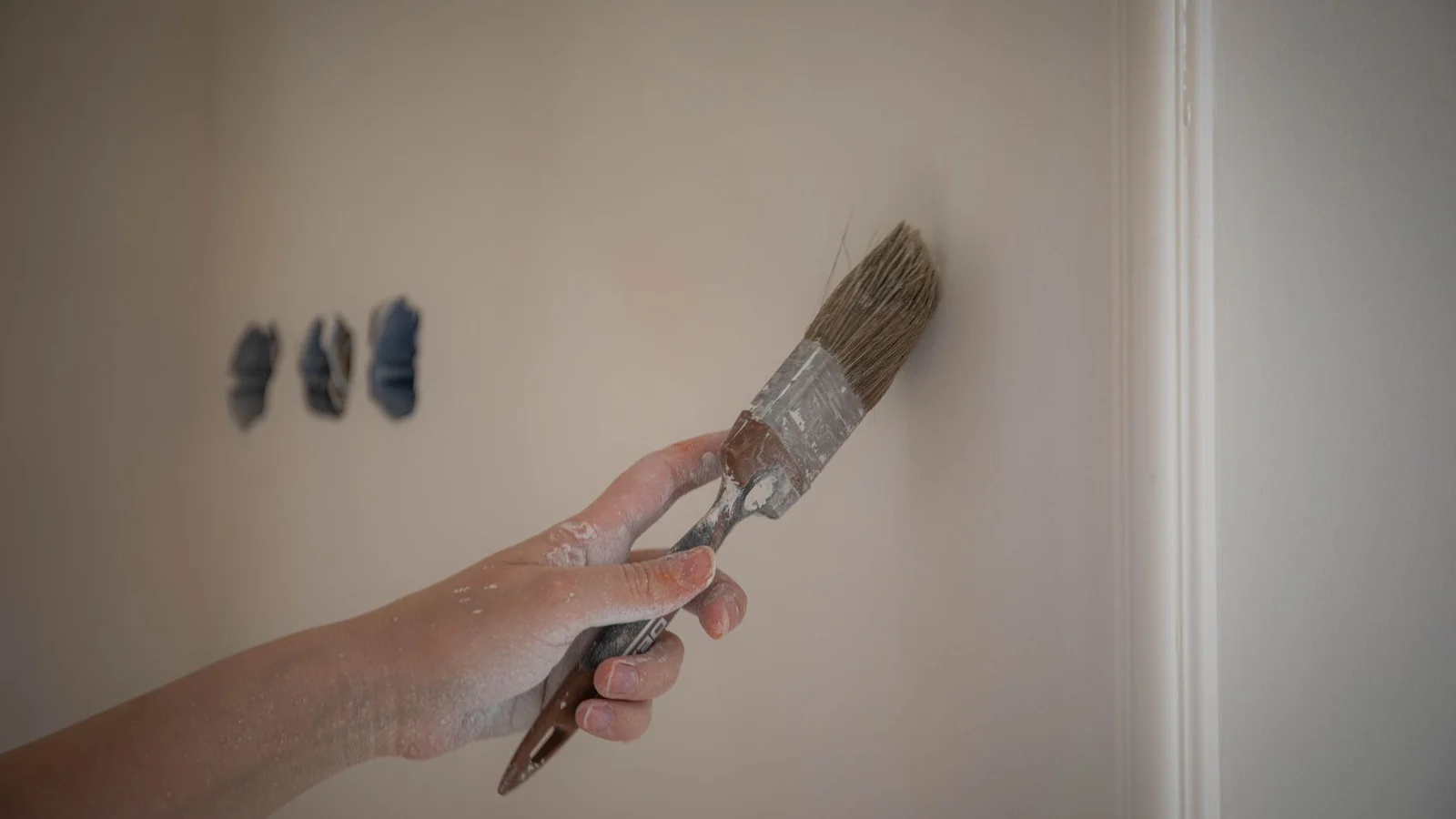
Application technique decides the rest. Use the smallest applicator that covers the spot, a tiny brush or a piece of foam, and dab rather than brush so you do not build a raised edge. Keep the paint thin and feather the wet edge outward into the surrounding wall instead of stopping at a hard line. Two thin coats blend far better than one thick one, and letting each dry fully prevents lap marks.
Moving Out Soon?
Get our free room-by-room move-out checklist and keep your deposit.
See the Checklist →Always prime a bare patch before color goes on. Spackle and joint compound absorb paint at a different rate than the surrounding painted wall, so color applied directly over them dries to a duller, flatter spot even when the shade is identical, a phenomenon painters call flashing. A quick dab of primer seals the patch so the topcoat sits evenly. Finally, use paint from the same can and color as the wall whenever possible, since even a fresh mix to the original formula can look brighter than paint that has faded on the wall for years.
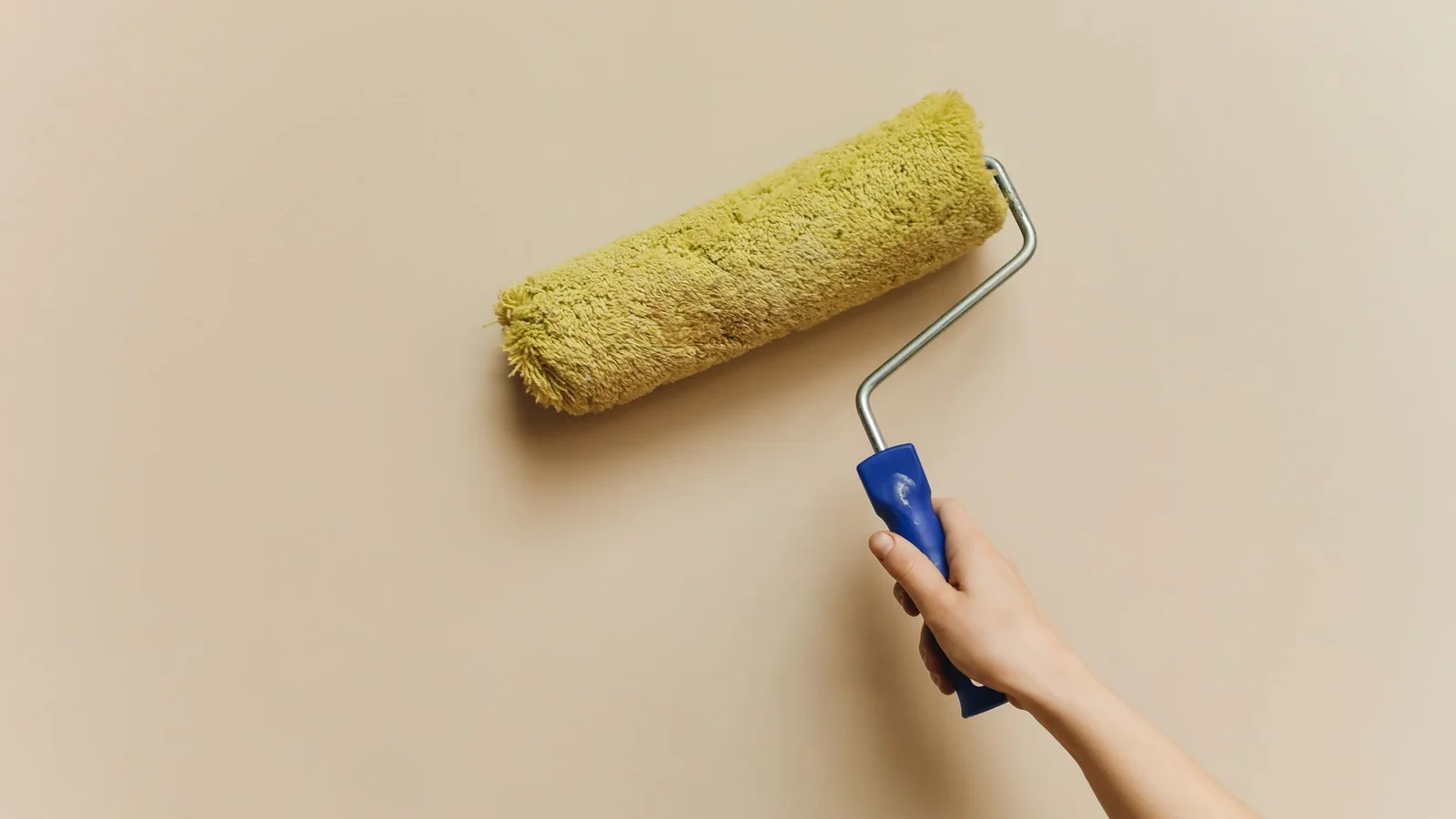
The most reliable way to avoid a patchy result on anything but flat paint is simply to repaint the entire wall corner to corner. A wall painted as one continuous surface has no seam for the eye to catch, while a spot touch-up on eggshell, satin, or semi-gloss almost always reveals itself in the right light. It sounds like more work, but for a visible wall it often takes less time than fussing over a touch-up that keeps showing, and the result is uniform rather than dotted with subtly different patches.
Sheen Mismatch Is the Hidden Culprit
Even a perfect color match can look patchy if the sheen doesn’t line up, since flat, eggshell, satin, and semi-gloss all reflect light differently under a lamp or sunlight. If your walls are builder-grade flat paint, a touch-up done with a slightly glossier leftover can from a prior project will always show as a subtle sheen halo, no matter how well the color matches. When in doubt, ask the hardware store to match both the color code and the sheen level printed on your original can, not just the color swatch.
Frequently Asked Questions
Why does my touch-up paint look patchy?
Mismatched paint or sheen and hard edges cause patchiness.
How do I fix it?
Use the exact paint, a small roller, and feather the edges.
When should I repaint the whole wall?
If touch-ups still show, painting corner to corner blends it best.
Related reading
- How to Remove Scuff Marks from Walls Without Damaging Paint
- How to Fix Scuffed and Scratched Rental Floors Without Losing Your Deposit
- How to Remove Crayon or Marker From Walls Without Repainting
- How to Clean Stainless Steel Appliances Without Streaks
Further reading
Helpful authoritative reading on this topic:
- HUD — Rental Assistance & Tenant Rights — Tenant rights and rental-assistance guidance by state
- EPA — Protect Your Family From Lead in Your Home — Lead-paint precautions when sanding or patching pre-1978 walls