Dishwasher Cleaning: An Often Missed Move-Out Task
The dishwasher is one of the appliances renters most commonly overlook during move-out cleaning. It seems counterintuitive since a dishwasher runs with water and detergent constantly, but food particles accumulate in the filter, mold grows around the door seal, and mineral deposits build up on the interior over time. A landlord who opens the dishwasher and finds a gunked-up filter or moldy seal will note it in the inspection report. A thorough dishwasher cleaning takes about 30 minutes and requires no special products.
Cleaning the Filter
Most modern dishwashers have a removable filter at the bottom of the tub. Twist and lift it out according to the manufacturer instructions for your specific model. Rinse it under running water to remove loose debris, then scrub it with a soft brush and dish soap to remove any grease or food particle buildup. A filter clogged with food debris is the most common cause of a dishwasher that does not clean well and the most common inspection flag. Reinstall the clean filter securely.
Cleaning the Door Seal
The rubber gasket around the dishwasher door accumulates food debris, soap residue, and mold in its folds. Wipe the seal down with a cloth dampened with white vinegar, working into the folds and creases. For visible mold growth on the seal, a diluted bleach solution (one tablespoon per cup of water) applied with a cloth and allowed to sit for a few minutes before wiping off is effective. Wipe dry when finished.
Moving Out Soon?
Get our free room-by-room move-out checklist and keep your deposit.
See the Checklist →Running a Cleaning Cycle
After cleaning the filter and seal manually, run a cleaning cycle with a dishwasher cleaning product. Tablets or pods specifically designed for dishwasher cleaning are placed in the bottom of the tub (not in the detergent dispenser) and run on the hottest cycle. Alternatively, a cup of white vinegar placed upright on the top rack and run on a hot cycle, followed by a cycle with a cup of baking soda sprinkled on the bottom, cleans and deodorizes the interior effectively without commercial products.
Exterior and Control Panel
Wipe the exterior door panel, handle, and control buttons with a damp cloth and an appropriate cleaner for the finish (stainless steel cleaner for stainless, standard cleaner for white or black). Remove fingerprints and smudges from the control panel area. Check the spray arms inside the tub and use a toothpick to clear any blocked nozzle holes.
Find dishwasher cleaning tablets and filter cleaning brushes: dishwasher cleaning supplies on Amazon.
More help: Appliances and Plumbing guides
Swapping a Showerhead and Keeping the Original
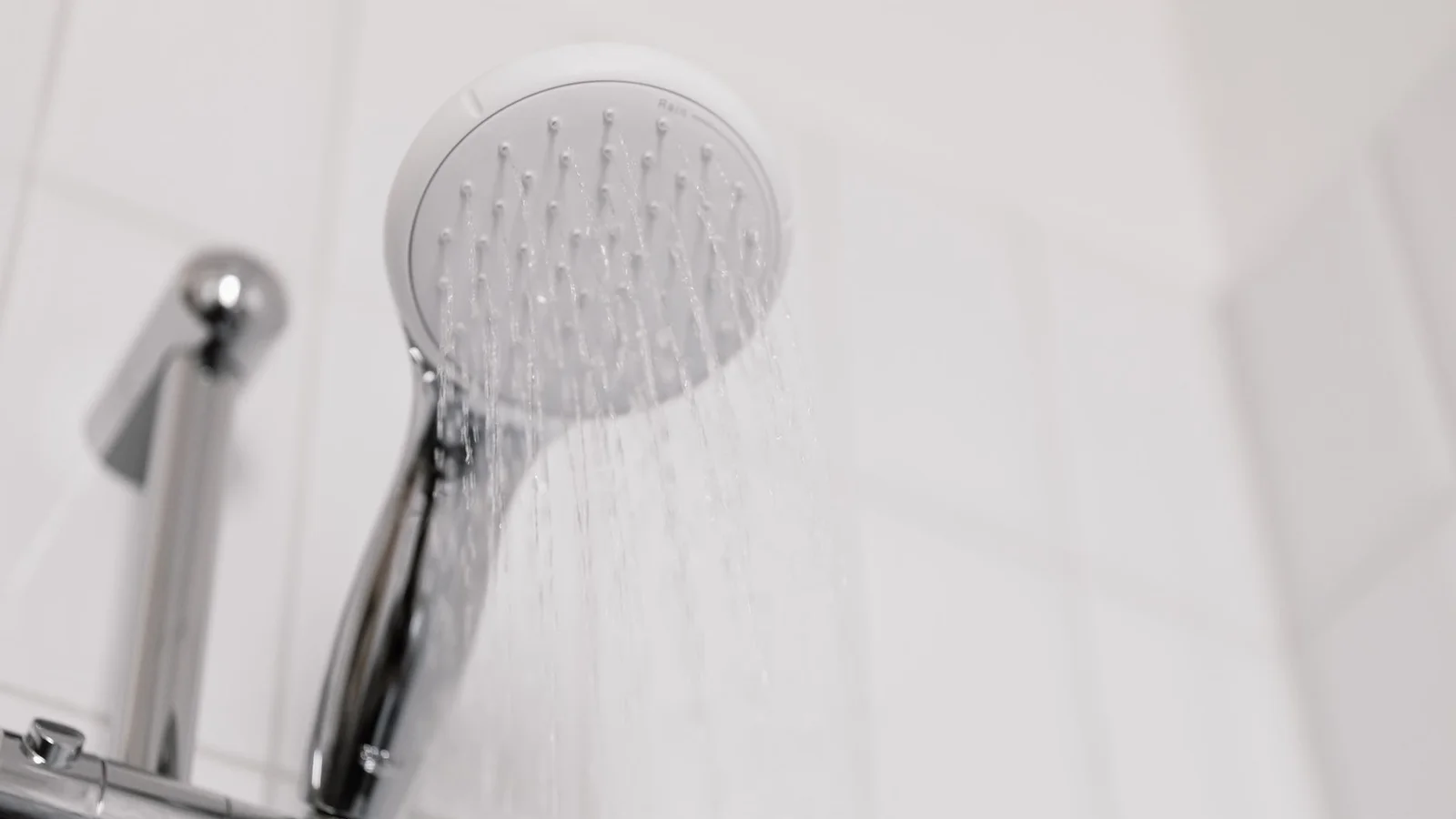
Replacing a showerhead is one of the easiest upgrades a renter can make, and because it is fully reversible it rarely raises any objection from a landlord, as long as you keep the original and reinstall it before you leave. A low-flow or clogged builder-grade head can ruin a shower, and a replacement that screws onto the existing pipe takes about ten minutes with no special tools beyond perhaps an adjustable wrench and some plumber’s tape.
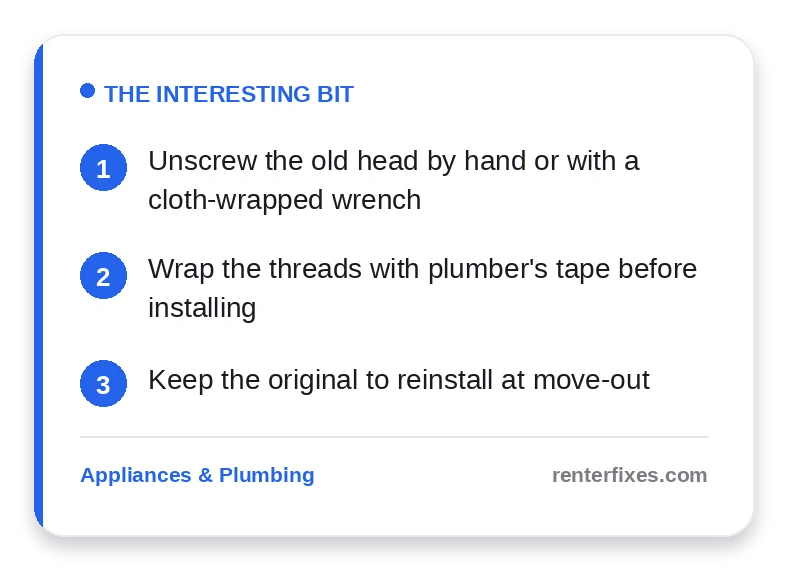
Start by unscrewing the old showerhead from the shower arm, the pipe that curves out of the wall. Turn it counterclockwise by hand, or grip it with a wrench padded by a cloth so you do not scratch the finish. If years of mineral buildup have it stuck, a little penetrating help and steady pressure frees it. Set the original head aside somewhere safe, like the box your new one came in, so you can put it back at move-out.
Before installing the new head, clean the threads on the shower arm and wrap them with two or three turns of plumber’s tape in a clockwise direction. The tape fills the threads and creates a watertight seal that prevents the drips and leaks that otherwise form at the connection. Then thread the new showerhead on by hand until snug, and give it a final gentle quarter-turn with the padded wrench if needed, being careful not to overtighten and crack the fitting.
Turn the water on and check the connection for leaks, adding a wrap of tape if you see any seepage at the joint. Because you have changed nothing inside the wall, this stays firmly in tenant-friendly territory. The only caution is to avoid removing or modifying any flow restrictor in a way that violates local water rules, and to confirm your lease does not specifically prohibit fixture swaps. Keep the original head, and reinstalling it at move-out leaves the bathroom exactly as you found it.
Keep the Old Showerhead for Move-Out
Swapping a showerhead is one of the most satisfying renter upgrades because it is reversible and requires no tools beyond your hands and a little tape. Unscrew the old head, wrap the threads with plumber’s tape, and hand-tighten the new one. The whole job takes minutes and instantly improves a weak or crusted-over fixture.
The key to keeping it landlord-approved is to save the original. Box up the old showerhead and reinstall it before you move out, restoring the fixture the landlord provided. Altering a rental is fine as long as you return it to its original condition, and a swap you can undo never becomes a deposit issue.
Frequently Asked Questions
Can I replace a showerhead in a rental?
Yes, it is a simple, reversible upgrade most landlords allow.
How do I install it?
Unscrew the old one, wrap the threads with plumber’s tape, and hand-tighten the new one.
Should I keep the original?
Yes, reinstall it at move-out and take your upgrade with you.
Related reading
- How to Clean Grout in a Rental Bathroom (Landlord-Ready)
- HVAC Filter: When and How to Replace It in Your Rental
- How to Fix Scuffed and Scratched Rental Floors Without Losing Your Deposit
- How to Fix a Running Toilet in Your Rental (No Plumber, No Drama)
Sources & further reading
A few reputable resources that back up the steps above:
- USA.gov — Tenant Rights — How to handle landlord disputes and deposit issues
- EPA WaterSense — Water-efficient faucets, showerheads and fixtures