Hard Water Stains: What They Are and How to Remove Them
Hard water stains are the white or yellow mineral deposits left behind when water evaporates from surfaces. The minerals calcium and magnesium in hard water remain on the surface after the water is gone, building up over time into a crusty coating that regular cleaning does not remove. Faucets, shower heads, glass shower doors, toilet bowls, and tile surfaces are the most commonly affected areas in a rental bathroom. Removing hard water deposits before move-out is important because they look like neglect even when the rest of the bathroom is clean.

The Right Cleaner: Acidic Products Work
Hard water mineral deposits are alkaline in nature, which means acidic cleaners are the most effective at dissolving them. White vinegar, citric acid, and commercial hard water removers (like CLR or Lime Away) are all acidic and work through the same chemistry. The key is giving the acidic product adequate contact time with the deposit before wiping, since the acid needs time to chemically dissolve the mineral bonds.
Faucets and Fixture Deposits
Soak a cloth in undiluted white vinegar and wrap it around the fixture, securing it in place so it maintains contact. Leave the cloth in place for 30 minutes to several hours depending on the severity of the buildup. Remove the cloth and scrub with a soft brush. The deposits should wipe or scrub away with minimal effort. For deposits in tight crevices around the base of the faucet, use an old toothbrush dipped in vinegar to work into the buildup.
Moving Out Soon?
Get our free room-by-room move-out checklist and keep your deposit.
See the Checklist →Toilet Bowl Stains
The ring line in a toilet bowl and discoloration at the base of the bowl from mineral deposit buildup responds to a commercial toilet bowl cleaner containing hydrochloric acid or similar active ingredients. Apply under the rim and allow to run down the bowl walls. Let it dwell for 10 to 15 minutes before scrubbing with a toilet brush. For very stubborn rings, pumice stone rubbing sticks designed for toilets physically abrade the mineral deposit without scratching porcelain. Use wet and work gently.
Glass Shower Doors
Hard water on glass shower doors creates a hazy white coating that makes the glass look perpetually dirty. Spray undiluted white vinegar on the glass and let it sit for 20 to 30 minutes before wiping with a non-scratch pad. Commercial glass descaler products are more effective for very heavy buildup. After removing the deposits, apply a thin coat of Rain-X or similar water repellent to the clean glass to slow future mineral buildup.
Find hard water stain removers and descaling products: hard water removal supplies on Amazon.
More help: Cleaning and Stains guides
Restoring Discolored Bathroom Grout
Bathroom grout turns dingy because it is porous and sits in a constantly damp environment, absorbing soap scum, body oils, and the mildew that thrives on moisture. Getting it back to a clean, uniform color is mostly a matter of the right cleaner, a stiff brush, and a willingness to let the cleaner dwell. The transformation can be dramatic, since clean light grout makes an entire bathroom look renewed, which is exactly the impression you want before a walkthrough.
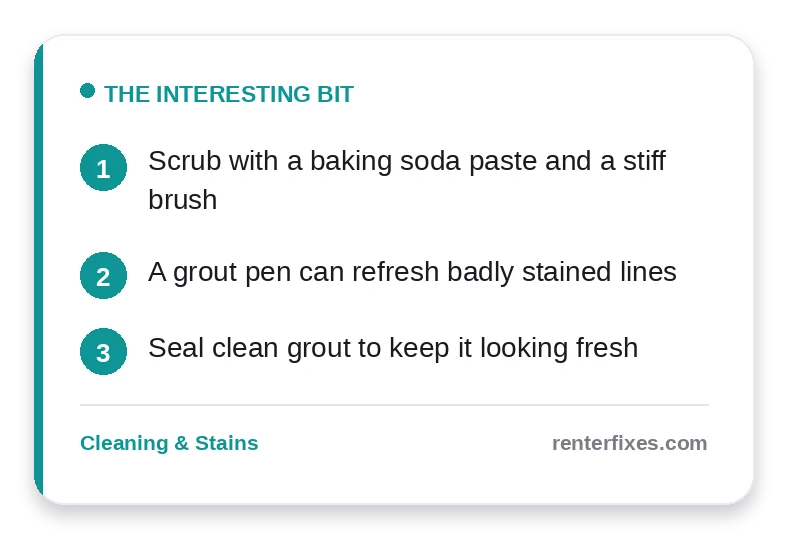
Begin with a homemade paste, which handles most everyday grime gently. Mix baking soda with a little water into a thick paste, spread it along the grout lines, and for extra lifting power spray or drizzle white vinegar over it so it fizzes. Let it sit for several minutes, then scrub the lines with a stiff grout brush or an old toothbrush, working the bristles into the texture. Rinse with clean water and assess; many bathrooms come fully clean at this stage.
For grout that is still discolored, especially with dark mildew staining, step up to oxygen bleach or a dedicated grout cleaner. Oxygen bleach mixed into a paste and left on the grout lifts deep staining without the harshness and fumes of chlorine bleach, and it is safer for colored grout and surrounding surfaces. Apply it, let it dwell, scrub, and rinse. Ventilate the room well during any stronger cleaning and wear gloves to protect your hands.
Once your grout is clean, two habits keep it that way and protect your deposit. Sealing the grout with a grout sealer, if you will be in the unit a while, makes it far more resistant to staining and moisture going forward. And reducing humidity by running the exhaust fan during and after showers and wiping down wet surfaces starves the mildew that discolors grout in the first place. If grout keeps darkening no matter how often you clean it, that persistent moisture may point to a ventilation problem worth raising with your landlord.
Get Grout Landlord-Ready, Then Keep It That Way
Cleaning rental bathroom grout is mostly about patience and the right tool. A baking soda paste worked into the lines and left to sit lifts most soap scum and light mildew once you scrub it with a stiff brush; an oxygen cleaner handles tougher discoloration without the fumes of bleach.
After it is clean, two finishing steps make it last. Dry the area and run a bead of grout sealer so moisture cannot soak back in, and for lines that are permanently stained, a grout pen evens out the color in minutes. Bright, consistent grout is one of the cheapest ways to make a whole bathroom read as well maintained.
Frequently Asked Questions
How do I clean dingy grout?
Scrub with a baking soda paste and a stiff brush.
What if it is still stained?
A grout pen can refresh badly discolored lines.
How do I keep it clean?
Seal the grout once it is clean.
Related reading
- How to Replace a Showerhead in a Rental (Landlord-Approved)
- How to Deep Clean Carpet in a Rental Without a Machine
- How to Fix Scuffed and Scratched Rental Floors Without Losing Your Deposit
- How to Fix a Running Toilet in Your Rental (No Plumber, No Drama)
Sources & further reading
Helpful authoritative reading on this topic:
- USA.gov — Tenant Rights — How to handle landlord disputes and deposit issues
- EPA Safer Choice — EPA-certified safer cleaning products